THE BEST VALUE CARBON WHEELSET
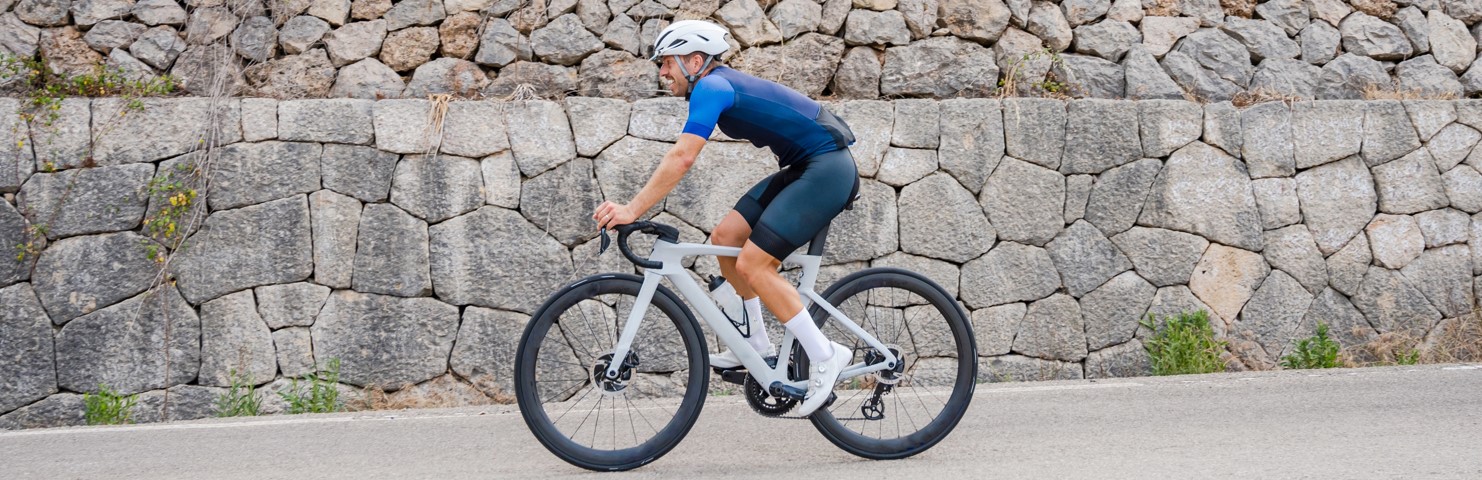
If you’re looking for a carbon wheelset at a budget price, the Bontrager Aeolus Pro 37, Zipp 303 S, and Elitewheels Drive 50D are the best value carbon wheelsets from over a dozen we’ve tested.
TL;DR (click for more)
- The best value carbon wheelset or budget bike wheels sell for US$900/£900/€900 to US$1500/£1250/€1400.
- The Bontrager Aeolus Pro 37, available here and here, is best for riders who prefer to use tubed clincher tires or ride in windy conditions.
- The Zipp 303 S is the best value carbon wheelset for cyclists committed to the benefits of riding tubeless, hookless tires. It is available here, here, here, and here from stores I recommend for their competitive prices and high customer satisfaction ratings.
- The Elitewheels Drive 50D wheelset is the best climber in this category and a very capable all-around wheelset. It’s available here, and you’ll get a 15% discount off of its already competitive price with the code ITKCycling.
- One chart and a complete set of reviews show how these three wheelsets compare to other value carbon wheelsets from Hunt, Scribe, Light Bicycle, Yoeleo, Shimano, ENVE, and Roval on price, performance, and specs.
- While these wheelsets cost less, their performance doesn’t equal that of higher-priced carbon wheelsets on the most important riding characteristics.
- Despite meeting similar price targets, companies selling value carbon wheels use different business models, manufacturing approaches, and return policies that might affect your choice between them.
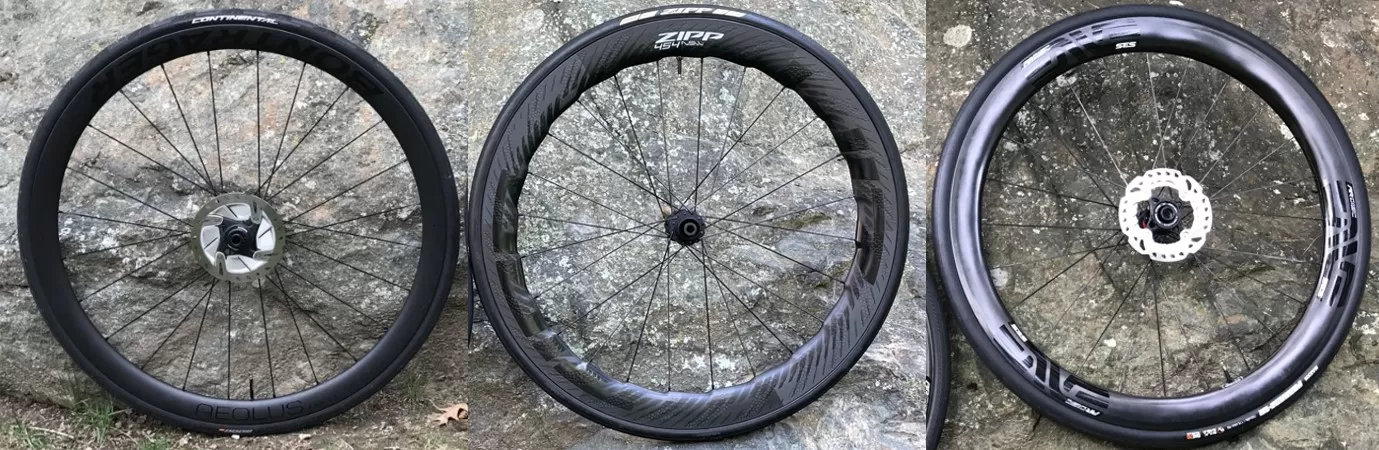
Related Reviews:
THE BEST CARBON ROAD BIKE WHEELS
REVIEWS OF VALUE CARBON WHEELSETS
The performance criteria my fellow testers and I use to evaluate wheelsets in the value carbon wheelset category, and others to a greater or lesser degree, are versatility, specificity, aero drag (hold momentum), sidewind stability, lateral stiffness, vertical compliance (aka comfort), and responsiveness.
You can read more about what I mean by each of these on my wheelset selection criteria page.
In the search for the best value carbon wheelset, I primarily look for a versatile, all-around type of wheelset that can perform reasonably well on various road surfaces and terrain. While some budget bike wheels are made for specialists who ride in the mountains, or do flat, high-speed courses, or ride gravel, specialization is less important in our evaluation of the group of wheelsets in this comparative review.
As I detail after the reviews you see below, even the best budget bike wheels and wheels in the value carbon category as a whole don’t perform as well as what I call performance carbon wheels that typically cost twice as much.
While durability is also important, we can’t fairly judge it in our testing since we only ride one wheelset of each model. We also don’t ride any wheelset for the year or two we’d need to before writing up the review to really see how well it holds up.
Instead, I look at each wheelset’s return, warranty, and crash replacement policies. These service policies are especially important since the companies selling value bike wheels use more varied business approaches and have a wider range of policies than companies selling performance carbon wheels.
Because most road bikes sold for the last several years have disc brakes, the development and, in many cases, the sale of rim bike wheels has stopped at many companies. For that reason, I only cover disc brake wheels in this review.
In a separate review, I’ve reviewed the best rim brake wheelsets still being sold and at a range of prices.
Here are the comparative ratings of value carbon wheelsets (click to enlarge), followed by our individual wheelset reviews.
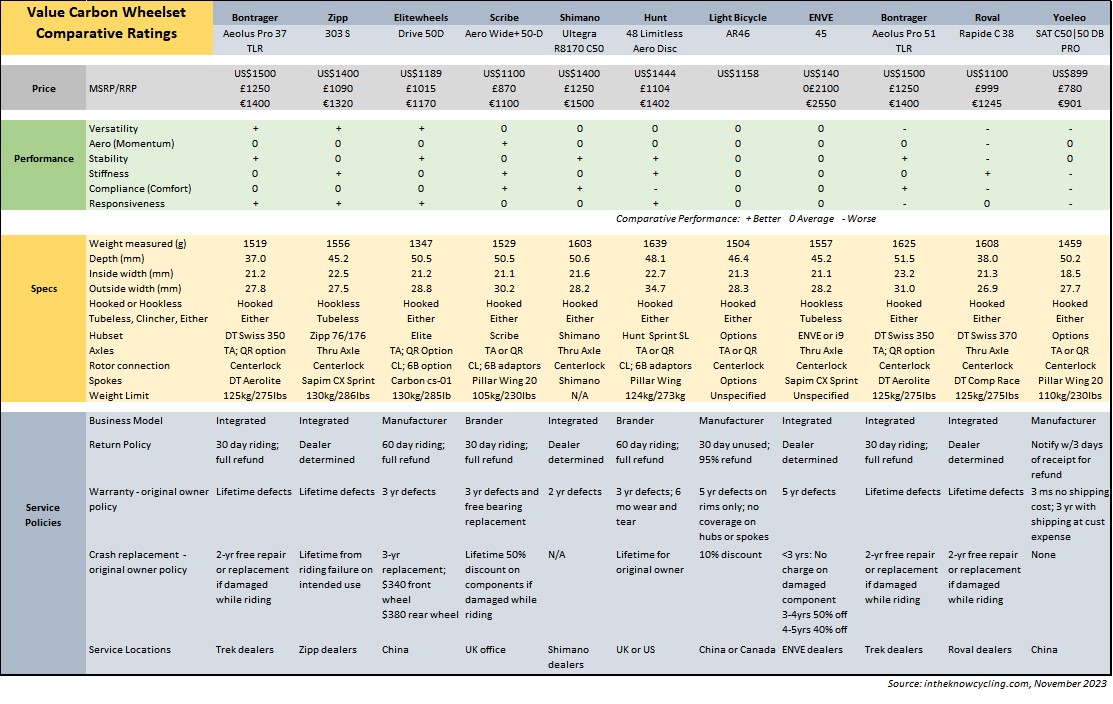
Click to enlarge
Bontrager Aeolus Pro 37 TLR – Best for clincher tire devotees
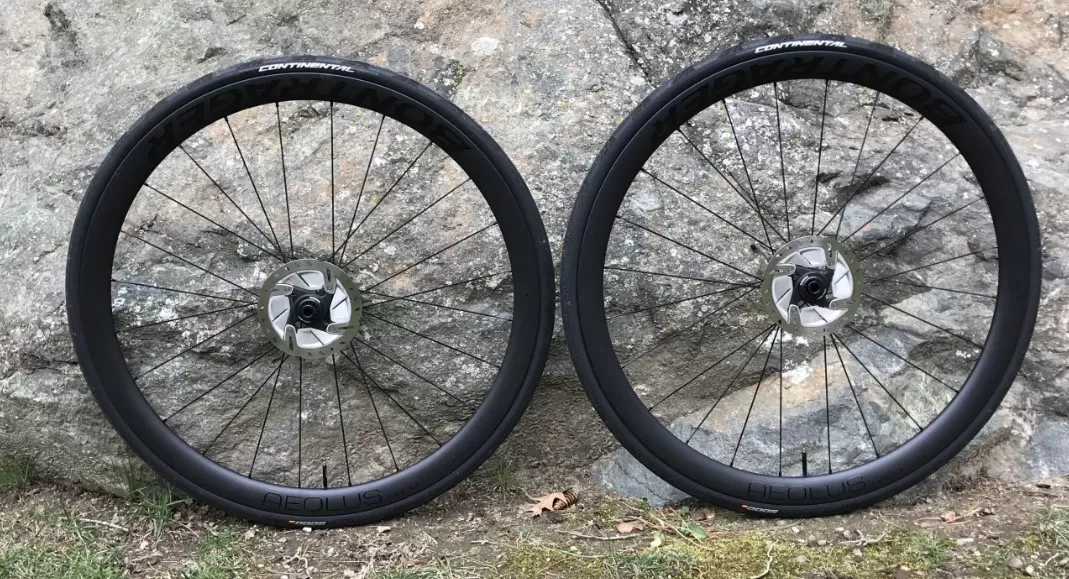
The Bontrager Aeolus Pro 37 is a wheelset that seems designed for the value carbon road disc rider from the get-go. It is a capable performer in all the key areas I look for in an all-around road disc wheelset and gets my nod as a best value carbon wheelset.
“Capable performer” may read like a backhanded compliment. I don’t intend it to be. It’s just that most of the wheelsets in the value carbon category have one or more major performance weaknesses that limit what you can do with them. This Bontrager doesn’t.
While the Aeolus Pro 37 doesn’t perform at the level of US$,£,€2000 and up carbon road disc wheelsets, its ride gave me equal or better performance across the board compared to other wheelsets I’ve tested within hailing distance of the Aeolus Pro 37’s US$1500, £1250, €1800 price.
It accelerates well and climbs without restrictions. It was plenty stiff enough for me doing either of those efforts and when I powered up for some town-line sprints.
The DT Swiss 350 rear hub freewheels with nary a whisper, allowing you to enjoy the peace of your ride or the calls from paceline mates. Audible preferences aside, they perform inconspicuously, neither rolling nor engaging noticeably better or worse than most hubs in the value bike wheels price range.
I rode these Aeolus Pro 37 wheels with 25C Continental Grand Prix 5000 tubed clincher tires at 70 psi for my roughly 145lbs/66kg weight. Set up this way, their comfort and handling was good – neither outstanding nor lacking.
I’d recommend anyone riding these wheels also do it on clinchers. Bontrager includes a cloth-like strap that easily stretches over the wheel’s sidewalls and snaps into place to cover the rim bed spoke holes.
To go tubeless, Bontrager includes plastic strips in the box that add over 100g to the total weight and aren’t easy to install. I snapped one and couldn’t get the other one centered correctly. For US$25, you can get what I found to be quite good Bontrager rim tape to seal the beds for tubeless or tube-type tires, but that takes a little bit of experience to get right.
While I recognize everyone has different tastes and therefore don’t usually share my opinion on the looks of a wheelset, I will say that if you prefer stealthy-looking, matt-finished rims with sufficient badging to let people know what you are riding, these Bontragers will be right up your alley.
Design: As with most bike wheels these days, the Bontrager Aeolus Pro 37 TLR wheelset is only made in a disc brake option and is “tubeless ready”. As per my comments above, I’d recommend you ride it with a tubed-tire setup or tape the rims rather than use the rim strips if you want to ride tubeless tires.
The wheelset with the easy-to-install cloth-like straps for tubed tires weighed 1519 grams on my scale. Taped wheels will weigh much the same depending on the tape you use. With the plastic tubeless strips, the weight increased to 1648 grams.
The rims I rode measured 21.2 mm wide on the inside (between the rim hooks) and 27.8 mm on the outside, near where the tire and rim join. With the 25C Continental Grand Prix 5000 tubed tires at my benchmark 100psi, the tires measure 27.6 mm wide. At a more comfortable 80psi, they run 27.4 mm. True to the Pro 37 TLR’s name, the rims measured 37.0 mm deep.
The carbon rim’s profile starts off on the inner spoke edge with a softened V profile and quickly adopts a U shape as it travels toward the outer tire edges. The spokes are bladed DT Swiss Aerolites attached to the rim with external alloy nipples. The hubset is also a DT Swiss branded 350 model.
Quality: While I’ve usually found Bontrager wheels very well built, the easy-to-break, hard-to-center tubeless rim strips I wrote about above were disappointing.
The rim and hub shell finish are first-rate. The decal labels also appear to be well-adhered and integrated nicely into the rim design.
Bontrager’s service policies suggest high confidence in its carbon wheels. You can ride them and still get a full refund within 30 days of your purchase if you decide you don’t want to keep them. They also come with a lifetime materials and workmanship warranty.
The crash replacement policy for these and all their carbon wheels is decent, if not the best. They will replace or repair your wheels for free within two years of you buying them if you damage them while riding.
As they are owned by Trek, which has one of the largest dealer networks, you can take your Bontrager wheels to any bike shop that sells Trek products for warranty or crash replacement service.
Price: Use these links to order the Bontrager Aeolus Pro 37 for US$1500, £1350, €1750 direct from Bontrager and Sigma Sports.
For a slightly deeper option better suited for wider tires and maintaining higher speeds on flat and rolling terrain, I suggest you consider the Pro 37’s big brother, the Bontrager Aeolus Pro 51, which sells for the same price, also direct from Bontrager and Sigma Sports.
In The Know Cycling is ad-free, subscription-free, and reader-supported. If you want to help keep it rolling without any added cost to you, buy your gear and kit after clicking the store links on the site. When you do, we may earn an affiliate commission that will help me cover the expenses to create and publish our independent, comprehensive and comparative reviews. Thank you, Steve. Learn more.
Zipp 303 S – Best for tubeless, hookless tire road disc riders
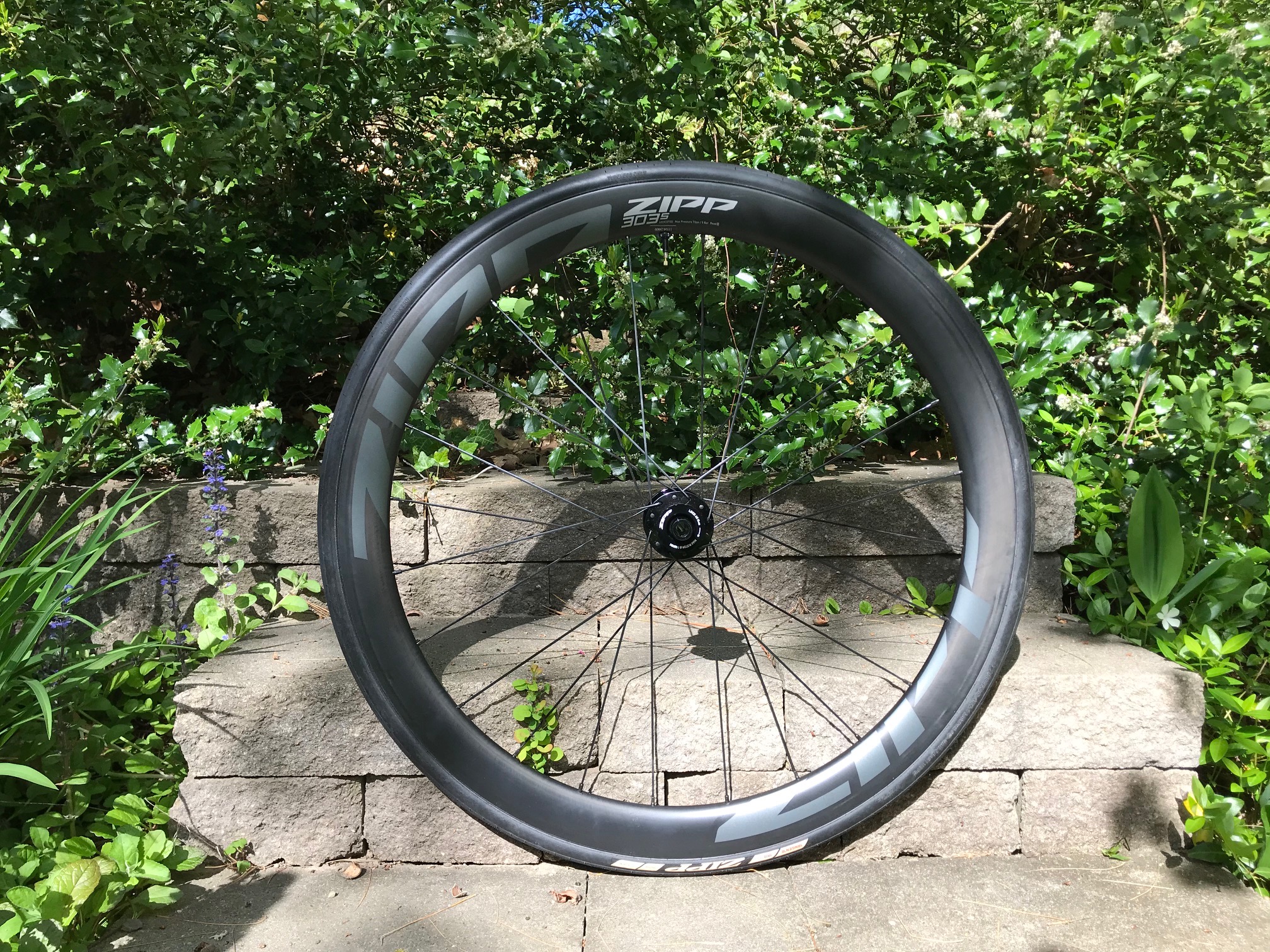
If the Zipp 303 S Tubeless Disc-Brake wheelset I rode for this review didn’t have the Zipp logo on the side of its rims, I wouldn’t have guessed it was from Zipp.
Regardless, it’s clearly a best value carbon wheelset winner.
It has better than average lateral stiffness and average vertical compliance (aka comfort). That’s the opposite of almost every Zipp wheelset I’ve ever ridden, and I’ve ridden quite a few in the 202, 303, and 404 series.
The high lateral stiffness is certainly welcome. Over the years, I’ve suggested to many larger or heavier-than-average readers that they go with a stiffer wheelset than those from Zipp. Lateral stiffness also translates to good handling in these wheels and effective climbing for a wheelset of its weight.
Less than Zipp-like comfort in the 303 S isn’t a knock, and it’s certainly not an issue. These are more like the comfort of the average mid-depth carbon wheelset. I did many 50-mile rides on them without any compliance-induced fatigue. It’s just that I had just gotten used to Zipp wheels being supremely comfortable.
Despite their 45mm depth, I felt only a small amount of “free speed” with the 25mm Schwalbe tires mounted on the 303 S. The pedaling effort (aka “watts”) I put into creating forward momentum with the 25mm and 28mm Zipp tires didn’t feel any easier to maintain as it does with more aerodynamic wheel-tire combinations when my speed gets above 20mph.
Knowing this, you can certainly make these wheels ride more comfortably by using a 28mm or wider tire without paying an aero penalty.
The 3-pawl Zipp 76/176 hubset is one of the few design aspects or components that carry over from earlier generation Zipp wheels. It’s pretty basic and pleasantly quiet; there’s certainly nothing objectionable about it. But don’t expect to get the same performance and smooth rolling of the Cognition hub Zipp puts on its NSW wheels just because they have the same logo.
The 303 S wheels did take notice of crosswinds but didn’t trouble me much about them. That was a very good thing as they climbed very well for a wheelset of its depth and weight.
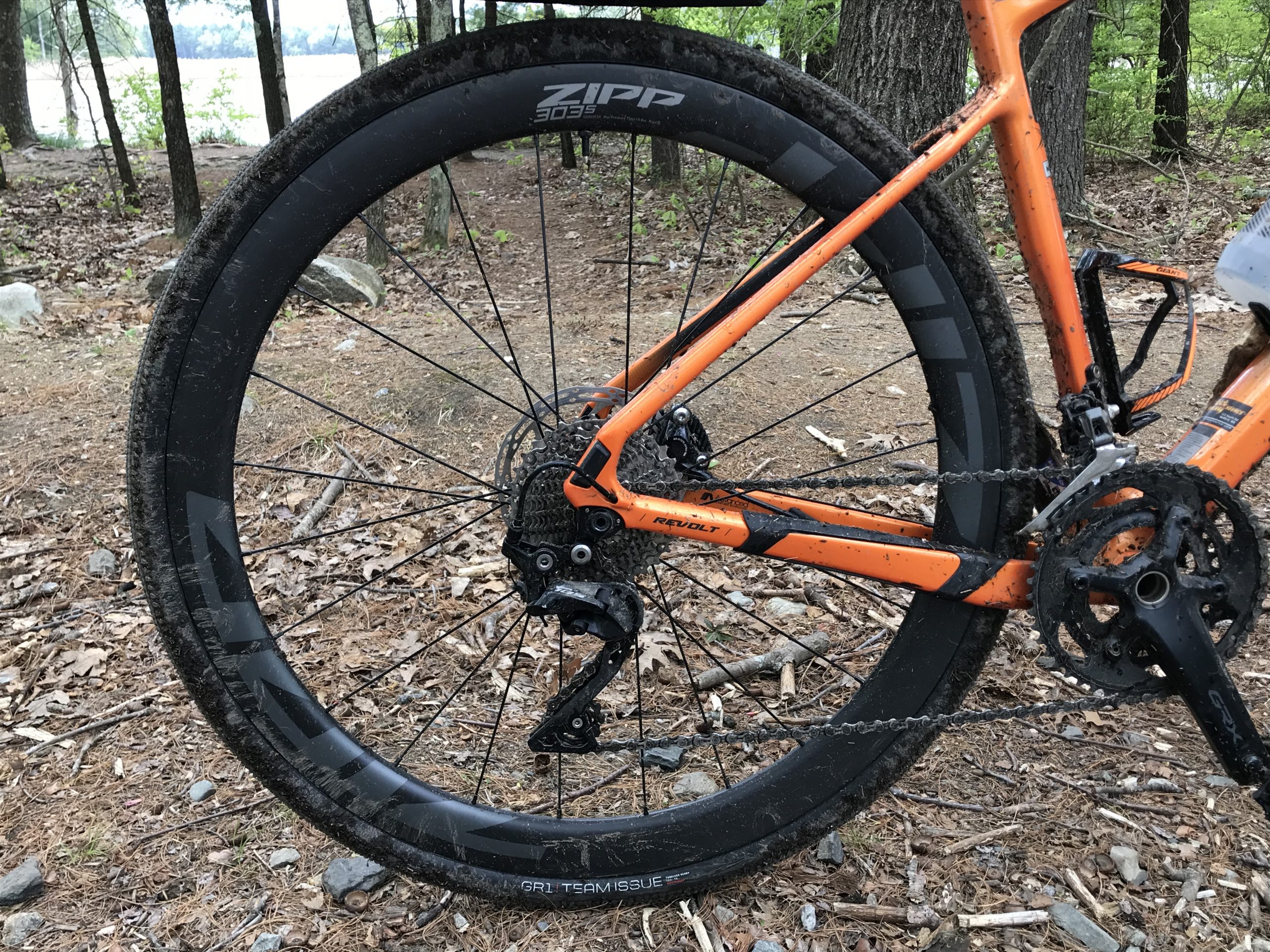
Also new for Zipp, the 303 S wheelset and the latest 303 Firecrest are the first in their new gravel wheelset category. While what qualifies as a gravel, road, or cyclocross wheelset or one well suited for all those disciplines these days is debatable, the 303 S internal width helps make the gravel argument.
From my testing, however, the 303 S rides on gravel more like most 21mm road disc wheels that are only slightly narrower than this one’s actual 22.5 mm internal width (per my measurement) and not nearly as well as the 25C rim width 303 Firecrest and others I’ve found are best for 35-40mm wide gravel tires.
Many ride 21mm (and 19mm and even 17mm) road wheels on gravel. You can certainly ride these as I did for miles on various dirt and gravel terrain. But these and other 21C wheels lack the comfort and handling of the best gravel wheels.
Because it’s a Zipp wheelset, I’ve reviewed it as critically as I would any wheelset that sells at historically Zipp-like prices. But this Zipp wheelset sells for far less and should be compared to those from other brands in this review of value carbon wheels that sell in the same price range.
Given its combination of stiffness, handling, climbing, and acceleration performance that is better than most others in this category, along with Zipp’s broad dealer service network and lifetime warranty, this Zipp 303 S is a value bike wheelset “best” pick for those who are committed to getting the lower rolling resistance of tubeless tires and know that they don’t gain anything by using hooked rims.
Design: As mentioned, the Zipp 303 S tubeless disc brake wheels have hookless rims that require you to use tubeless tires. Most of the better tubeless tires are hookless compatible. Even 200lb/90kg riders needn’t inflate 28mm tires above the recommended 72.5 psi/5 bar maximum inflation pressure. what i
While most tubeless wheels these days have hooked rims that will lock in the flexible beads of tube-type clincher tires and give you the option to choose between going tubeless or tubed, you can only use tubeless tires on these wheels. If you prefer to use clinchers, these wheels aren’t for you.
The wheels weighed 1556 on my scale with pre-installed rim tape but no tubeless valves. They measured 45.2mm deep with a 22.5mm inside and 27.5mm outside rim width. The rim profile starts V-shaped at the spoke bed and quickly transitions to more of a parallel U shape.
Zipp uses their 3-pawl 76/176 hubset on the 303 S, one they used previously on the first 302 and earlier 303 Firecrest disc brake wheels. There are 24 bladed, j-bend spokes on the front and back wheels with external nipples.
The rims are made, and the wheels are assembled in SRAM’s Taiwan factory.
Quality: Like many lower-priced wheelsets, the hubs use push-in end-caps. That’s usually not a problem. But, if you frequently remove the 303 wheels from your bike and change between road and gravel tires, it’s not difficult for the end cap on the freehub to pull off from the weight of the cassette. It happened to me on a couple of changeovers, and I had to scramble to put a pawl or two back in place. I was more careful after that.
Most notably, Zipp now gives the original owner of their wheels a lifetime warranty on any materials or workmanship defects. If it fails while riding or racing a wheelset in the way it was intended, they will repair or replace it at no cost to you for the lifetime of your ownership. That’s about as good as it gets.
Zipp doesn’t offer a trial riding period as some other brands do. They leave that up to their individual dealers to determine whether to credit or refund you if you want to return one of their wheelsets after riding it.
Like other major wheelset brands, Zipp has an extensive dealer network of bike shops you can bring your wheels into for any repair or warranty issues regardless of where you purchased them.
Price: The 303 S wheelset lists for US$1400, £1090, €1320, a very un-Zipp-like price. It often sells for less.
You can order the 303 S at stores I recommend for their competitive prices, great selection, and high customer satisfaction ratings using these links to BTD (BikeTiresDirect), Performance Bike, Merlin, and Sigma Sports.
Elitewheels Drive 50D – Best value for climbing
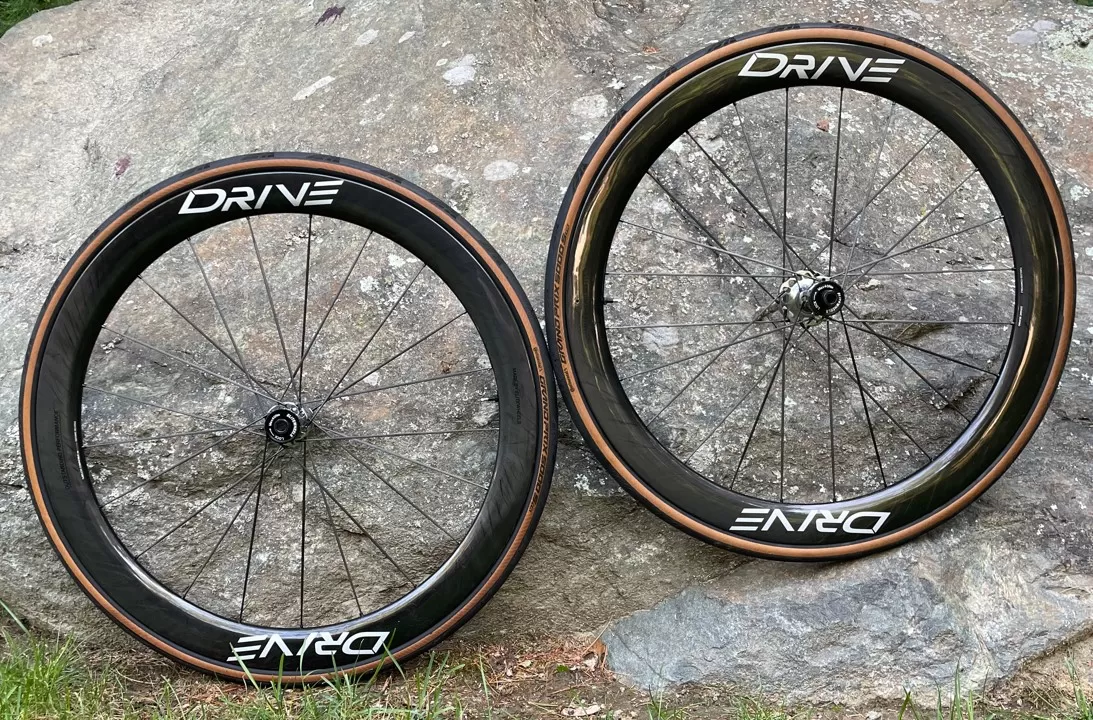
While all wheelsets perform differently, the Elitewheels Drive 50D wheelset stands out as the only serious climber among the value carbon bike wheels we’ve tested.
Its combination of stiffness and low weight really came through when fellow tester Miles and I rode the Drive 50D up steep pitches and across rolling terrain.
As a rider who is usually looking for a pull on anything steeper than a 5% grade and lives where flats never seem to last for more than a quarter of a mile, I welcomed the Drive 50D’s ability to “level the playing field.”
While it’s not on par with lighter, more expensive, dedicated climbing wheels, these Elitewheels are notably better on this kind of variable-grade terrain than anything else we’ve tested in the value carbon wheelset price range.
Yet, the Elitewheels Drive 50D is not exclusively a climber’s wheelset. Far from it. Our takeaway from riding it for three months is that it’s a paved road all-arounder, which also happens to be a good climber.
As an all-arounder, and compared to other budget bike wheels, it performs on par with most in this price range and among the best in some ways.
The Drive 50D is one of the most responsive value carbon wheelsets we’ve tested. It accelerates almost as if reading your mind; there’s no hesitation once you put your foot down. In a large group ride, when the pace can vary continuously, this performance characteristic can reduce the spikey power surges and cadence drags that might otherwise create more fatigue than you bargained for.
I’m not one to project performance directly from wheelset design or component choice, but I’ll note the Drive 50D does have carbon spokes. One theory goes that carbon spokes make for a more responsive and stiffer wheel. Theories aside, and as I attested to above, these are very responsive wheels.
But not to get too carried away, the carbon spokes on these wheels, or perhaps how they are combined with the hubs and rims, don’t lead to consistent stiffness in our experience.
For me and my 175 to 250-watt typical ride power, I found the Drive 50D plenty stiff. Miles also felt it on climbs. On the other hand, the wheels felt a bit “sloppy” for Miles and his P/1/2 power, seemingly leaking some of it when he cranked it up for breakaway and sprint efforts.
And, regardless of its design or materials, the Elitewheels Drive 50D’s compliance or comfort is also more like the average wheelset in this category than ranking with the best.
Even with less than aerodynamically ideal 28mm wide tires inflated to a below-recommended pressure of 50-55 psi, the comfort on decent roads was just ok and not noticeably better than with the tires pumped ten psi higher. The ride became a bit jittery on rougher roads or uneven sections of good ones.
Riding the 28mm tires that measured wider than the rims didn’t seem to slow the Drive 50D’s momentum. Once up to speed, something that takes less time to do with these wheels, they hold that speed about as well as all but one wheelset in this category.
And in side winds, the Drive 50D is very stable, cutting through them better than most. We noticed no drifting or buffetting from the winds.
The Drive 50D freehub is audibly louder than the latest DT Swiss 240 EXP hubs and at the same decibel level as a Chris King or Industry Nine hub. Yet, it doesn’t express the more enjoyable harmonic range accompanying those freehubs. While the Drive 50D freehub is loud, it’s not egregiously so like the Scribe and Hunt ones that hold me back from wanting to ride those wheels.
For you OGs who remember that far back, the Elitewheels hubs sound like Mavic hubs of 10 or 15 years ago. And like the old Mavics, the Elitewheels hubs we tested were silver. Starting in mid-2023, however, they only come in a more modern black matte finish.
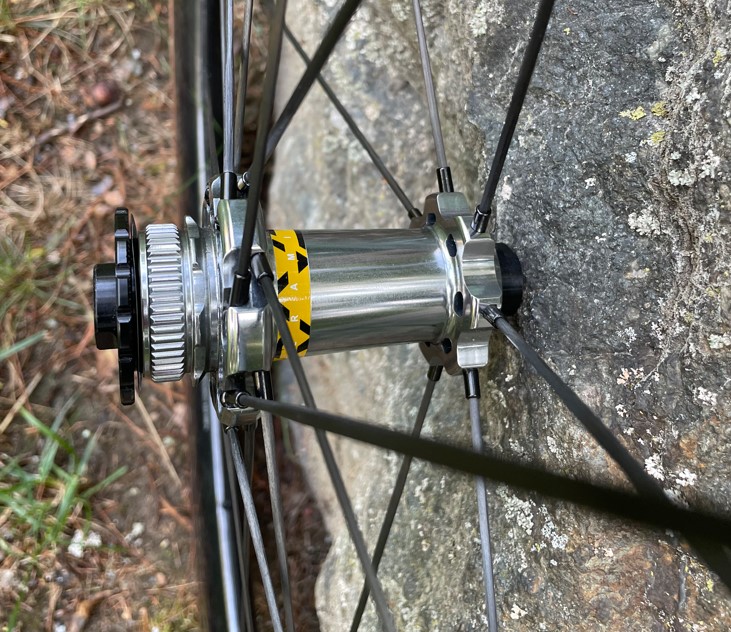
Hub shells and flanges now come in a black matte finish and taper larger toward the disc side flange.
If anything, the silver Drive 50D hub shells taper to a slightly larger diameter on the disc side. While I get that they may have done this for structural reasons, this requires you to use the supplied lockrings with tightening notches on the outside of the ring and a tool for that purpose (not supplied) rather than the more commonly used ones with notches on the ring insides similar to cassette lockrings that use the same tool to synch it down.
The rims also have a distinctive look. A high gloss clear coat shines on top of a marbled carbon rim finish with your choice of a black or white, nearly full rim depth Drive logo.
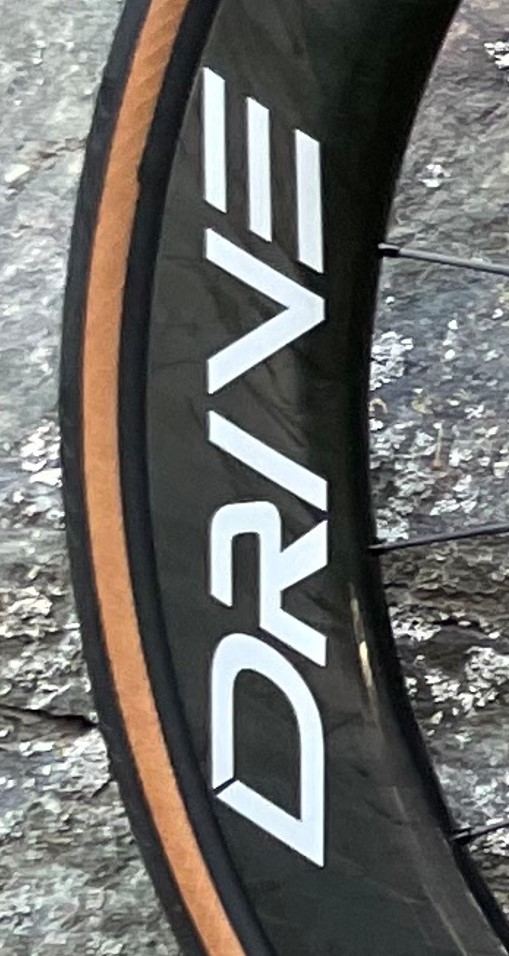
Glossy coating over a marbled carbon finish gives the Drive wheels a distinctive look.
I find the rims quite stunning. I never did a group ride without someone asking me about what wheels I was riding.
Like most observations about cycling gear, however, the Elitewheels Drive 50D’s aesthetic and acoustic qualities are in the eyes and ears of the beholder. They don’t affect the wheelset’s performance but could affect your performance if it changes your feelings about riding these wheels.
Design: Along with 21 front and 24 rear straight pull carbon spokes, the Elitewheels Drive 50D hubs come with bearings that use ceramic balls. While these so-called ceramic bearings used in hubs and derailleurs make for good marketing, at the low speeds that we ride bicycles, the best ceramic bearings actually wear faster and reduce friction losses by an insignificant amount (<1 watt) compared to stainless steel ones made to the same roundness tolerances.
Bearing seals, lubricants, and cages each play a far larger role in frictional losses than the choice of ceramic or stainless ball bearings.
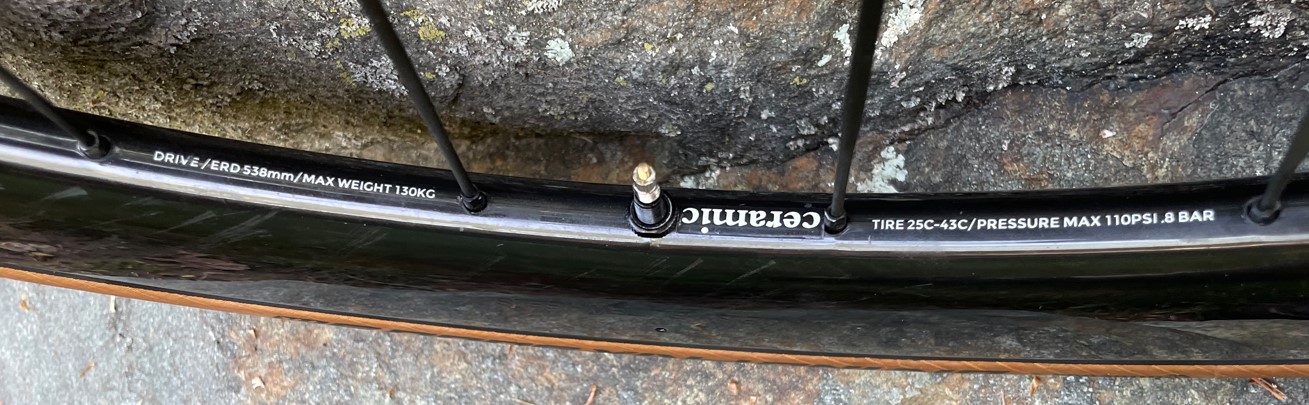
Max weight and tire pressure specs are visible right on the glossy rim’s spoke edge
The carbon rims on the Drive 50D wheels we tested measured 50.5mm deep with widths of 21.2 mm inside and 28.8mm outside on average, measured at various locations on both the front and rear wheels.
At a measured weight of 1347 grams with a Shimano/SRAM 11-speed HG freehub, these Elitewheels weigh at least 150g less than other value carbon wheelsets we’ve tested.
Like most but not all value bike wheels sold these days, you can use clincher or tubeless tires on the Drive 50D’s hooked rims. The wheels come standard with hubs set up for thru-axles and centerlock rotors. If you’ve got an older disc brake bike, you can order them for use with quick-release axles and 6-bolt rotors. Mine were delivered with the rims pretaped for tubeless, valves installed, and four extra carbon spokes.
The Drive lineup includes a 40mm depth wheelset and rim brake wheels. Given how well the Drive 50Ds perform in side winds and how light they feel, I don’t see a reason to go any shallower. Not having tested the rim brake model, I can’t speak to the performance of those wheels.
Quality: As with value carbon wheels that we’ve found perform the best, Elitewheels policies are quite good. You can return them for a full refund within 60 days if you don’t like how they ride.
The original owner gets a 3-year warranty against manufacturing defects. If you need to replace the front or rear wheel within that same timeframe due to a crash, Elitewheels will give you what amounts to nearly a 50% discount on the original price of the damaged one.
Elitewheels sells and services their wheels from their manufacturing base in China. The shipping is free, and it took about a month for the wheels I ordered to arrive in the United States.
Price: The Elitewheels Drive 50D wheelset is competitively priced at US$1189, £1015, €1170 and available using this link to Elitewheels. If you use the code ITKCycling, you’ll get a 15% discount, effectively reducing the price to US$1011, £863, €995.
Find what you're looking for at In The Know Cycling's Know's Shop
- Compare prices on in-stock cycling gear at 15 of my top-ranked stores
- Choose from over 75,000 bikes, wheels, components, clothing, electronics, and other kit
- Save money and time while supporting the site when you buy at a store after clicking on a link
Scribe Core 50-D (formerly Aero Wide+ 50-D) – Loud, aero, and unexpected
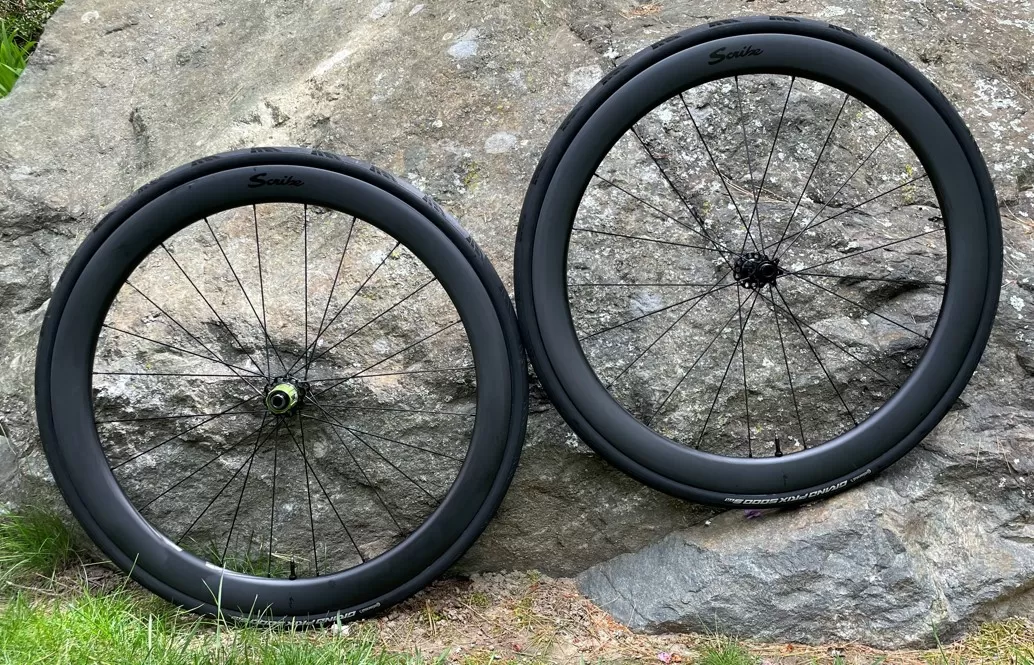
If you really don’t like the sound of a really loud freehub when coasting, the Scribe Core 50-D wheelset really isn’t for you.
I’m not talking about what you hear coming out of the latest generation DT Swiss 240 freehub or the louder yet distinctive chordal sound of a Chris King R45 freehub. No, the Scribe freehub is a far louder, lower-pitch noise that almost sounds angry.
Other riders told me not to coast near them, based on their hand motions, because I couldn’t hear them until I started pedaling again. My fellow tester Miles heard the comments too from those in his group when coasted down a fast downhill.
And yes, I tried to quiet the hub using the grease and video instructions Scribe sent me for that purpose. I noticed little difference.
I go into this first because it’s the most distinctive characteristic of this wheelset.
If none of that bothers you, or you prefer loud freehubs as I know some do, the Scribe Core 50-D (formerly known as the Aero Wide+ 50-D) is a great value-priced, carbon wheelset option for fast riding and racing on flat and modestly rolling terrain.
Miles and I found these Scribe wheels hold their momentum well at speed on straight sections. They are also plenty stiff enough to give you the confidence to lean into a corner, ride through it, and power out at high speeds.
If you’ve got the watts of a racer like Miles, these Scribes are responsive and fast enough to cover most any accelerations. For me, more of a B group rider without the turbo boost power of a racer, their response felt more like a slower reacting, more typical aero wheelset.
When the road pitched up, we both found the wheels struggled, as do many aero wheelsets. Rolling courses with long yet modest hills make you work hard on the Scribe Core. Short kickers of 7-10% really slow you down.
The aero wheelset analogy extends to my need to lean these Scribes into steady side winds to stay on my line. When I got hit by gusts, I couldn’t hold it.
Miles had a better experience, finding the side winds didn’t affect him much, and performed better than other wheelsets he’s tested. While we weighed more or less the same, the winds were highly variable during our spring testing, perhaps leading to our different reactions.
With a good set of supple, tubeless tires inflated lower than you might normally set them, the Scribes can be quite a comfortable wheelset on good roads and bad. We tested them with both 28mm Schwalbe Pro One TLE and 28mm Continental Grand Prix 5000 S TR tires at pressures ranging from 55psi/3.8bar to 65psi/4.5bar for our 148lb/67kg to 155lb/70kg body weight.
The Contis at the lowest inflation pressure was the most comfortable combination.
Design: I measure and weigh wheels when they first arrive, share none of that info with my fellow testers, and forget most of it myself with all the gear traffic coming through the door. That usually turns out for the best, as not knowing the specs limits the performance bias we might bring into our test riding.
That certainly made sense for this wheelset. The specs and most of the original Aero Wide+ 50-D name suggest very little about how we found that these wheels perform.
At 1529 grams measured with pre-installed tape but without the valves (vs. the claimed 1448 grams) and 50.5 mm depth, they spec out more like an all-around wheelset than an aero one.
Measuring 29.6mm externally near the tire edge of the rim, 30.2mm at their widest point, and 21.1mm internally, these wheels are wider than some but not nearly as wide as many that provide the kind of handling and comfort these Scribes can.
And despite all the attention the loud freehub with its glossy hub shell and white script Scribe logo calls to this wheelset, the matt grey finish on the rims we tested is quite a modest look. Miles calls them “boring.” They look ok to my style-blind eyes but certainly are at odds with the boisterous, flashy hubs.
While I’m really out of my depth trying to psychoanalyze a set of wheels, the unexpected nature of the Scribe’s performance compared to its specs and its aural and visual aesthetics seem to make it, behaviourally if not technically, an eccentric wheelset. The freehub almost calls out at you, saying, “look at me.” When you do, the rim finish seems to respond with, “Nothing to see here.”
Setting aside my psychobabble (or should I say cyclo-babble?), this Scribe is another example of why I focus on performance and not specs in our reviews.
Quality: Scribe’s warranty policies are better than many that sell wheels at similar price points, especially those sold directly by overseas manufacturers.
Specifically, they offer a 3-year warranty against material or workmanship defects and a 50% crash replacement discount for the life of the wheels. Should you need or want them, they will also send you a set of replacement bearings in years 2 and 3 of your warranty free of charge. All of these apply to the original owner.
Miles and I didn’t experience any quality issues during our several-month test period. I did open up the freehub to grease it, and to my untrained eyes, it seemed to be well-built. Scribe includes valves and lockrings along with spare spokes, nipples, and other parts to adapt the wheels to older disc brake rotor technologies.
Price: Available direct from Scribe, the Core 50-D wheelset sells for US$1000, £800, €1000. While shipping is free, Scribe notes the price “may be subject to additional customs charges,” and indeed, mine were though Scribe told me that it doesn’t happen often.
Shimano Ultegra C50 – An Endurance Rider’s Wheelset
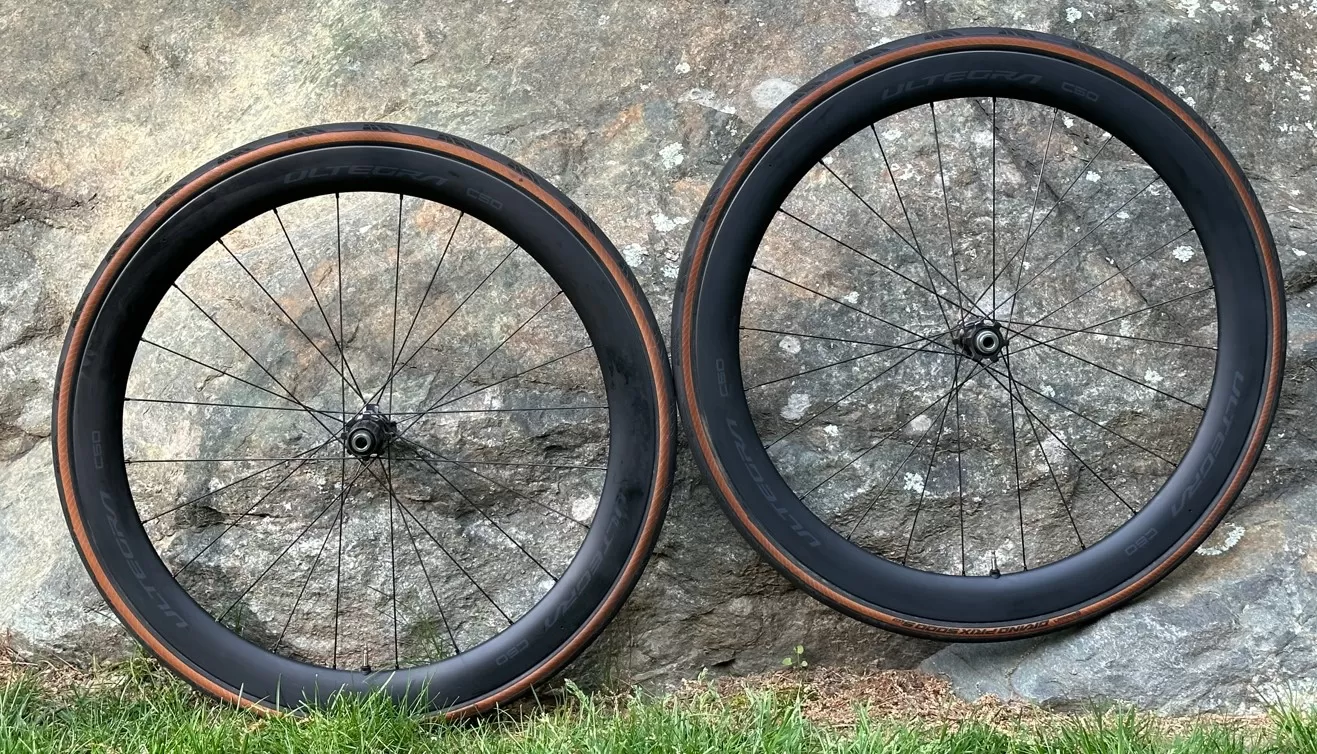
The latest Shimano Ultegra C50 wheelset is totally consistent with my experience of Shimano products – well-made, well-balanced, better supported, and at the higher end of the price range of products in its category.
In the years before Shimano introduced the Ultegra C50 as part of its 36, 50, and 60mm deep line of Ultegra and Dura-Ace wheels – its first tubeless-only, road disc brake models – several generations and a crapton of tubeless, road disc wheel models from other brands and manufacturers have come and gone.
And like many of its other Ultegra products, the Shimano Ultegra C50 wheelset (aka the WH-R8170-C50-TL) lands squarely in the middle of the performance pack. There are better, and there are worse-performing ones in the value carbon wheelset category, where I put the Ultegra C50. And these hoops’ attributes and the experience of owning a Shimano product may make them right for you.
My fellow tester Miles and I came away from independently testing the Ultegra C50, believing it can be a good wheelset for more conservative enthusiasts, recreational riders, or as a training wheelset for racers who want to spend the money to keep the miles off their high-performance wheels.
In short, it’s an endurance rider’s wheelset.
If you inflate your tires to the right pressure for your tire width and weight, the Ultegra C50 is one of the more comfortable value carbon wheelsets we’ve tested. We rode it with 28mm Continental Grand Prix 5000 S tubeless tires with sealant, though you could use tubes inside or a clincher setup if you prefer.
It also manages crosswinds better than most wheels with 50mm deep rims. On the windiest days and in strong gusts, these Ultegras will get pushed a bit but in a steady way rather than one full of unpredictable jitters. You can easily manage the winds’ effect on the front wheel with some counter-resistance on your bars.
The Ultegra C50 hubs roll and coast smoothly and without a sound. Some of the less expensive value carbon wheelsets are on the opposite end of the sonic spectrum – so loud when coasting that you can’t have a conversation with a fellow rider or get the peace you may seek on a solo ride.
We found the Ultegra C50’s performance on other criteria – specifically, its stiffness, responsiveness, and ability to hold its speed – to be very middle-of-the-road. You don’t feel any snap when you put the power down, they don’t get up to speed as fast as several other value carbon wheelsets, and you don’t get any help from the wheels maintaining your momentum once you get above 20mph/32kph or so.
To be fair, there are just a few wheelsets in this category that do some of those things better than the others and none that do all of them. But the Ultegra C50 isn’t one of them.
However, if you combine this Shimano’s comfort and stability along with its quiet hubset, it’s sympatico with those who do a lot of endurance or Zone 2 training where quick acceleration, hard cornering, or fast riding isn’t on the menu. And if you never ride that way or have a higher-performance wheelset that you want to keep free of logging all those long-slow-distance training miles, the Ultegra C50 is an option to consider.
Design: Shimano continues using a cup-and-cone bearing design in its hubs, making these wheels roll smoothly and quietly.
Recognize, however, that you’ll want to grease the hubs every year when riding in good weather and more frequently if you ride on wet roads to keep the bearings and races from wearing out and needing to replace the entire hub. Most hubs nowadays use cartridge bearings that you can simply and inexpensively replace when their time has passed without affecting the longevity of the hub itself.
The Ultegra freehub has only 36 points of engagement, a design that creates a lag between when you put your pedals down and the power kicks in when racers like Miles want to sprint out of a corner and kick-off (or follow) a breakaway.
Shimano makes a micro-spline freehub for its Dura-Ace wheelsets that, along with its 12-speed cassette, does increase the POE to 50 for faster engagement. The Ultegra C50 freehub we tested did not have a micro-spline freehub, but neither Miles nor I have 12-speed Shimano groupsets either.
Also, this wheelset isn’t for you if you use SRAM or Campagnolo 12-speed gruppos. Shimano doesn’t make XDR or N3W freehubs for its Ultegra or Dura-Ace wheels to use with its competitors’ groupsets.
The Ultegra C50 weighs in at 1603 grams on my scale, including the preinstalled rim tape and valves. Its hooked, VU profile carbon rims measure 50.6mm deep, 28.2mm wide outside, and 21.6mm inside. The front and rear wheels have 24 bladed, straight-pull spokes.
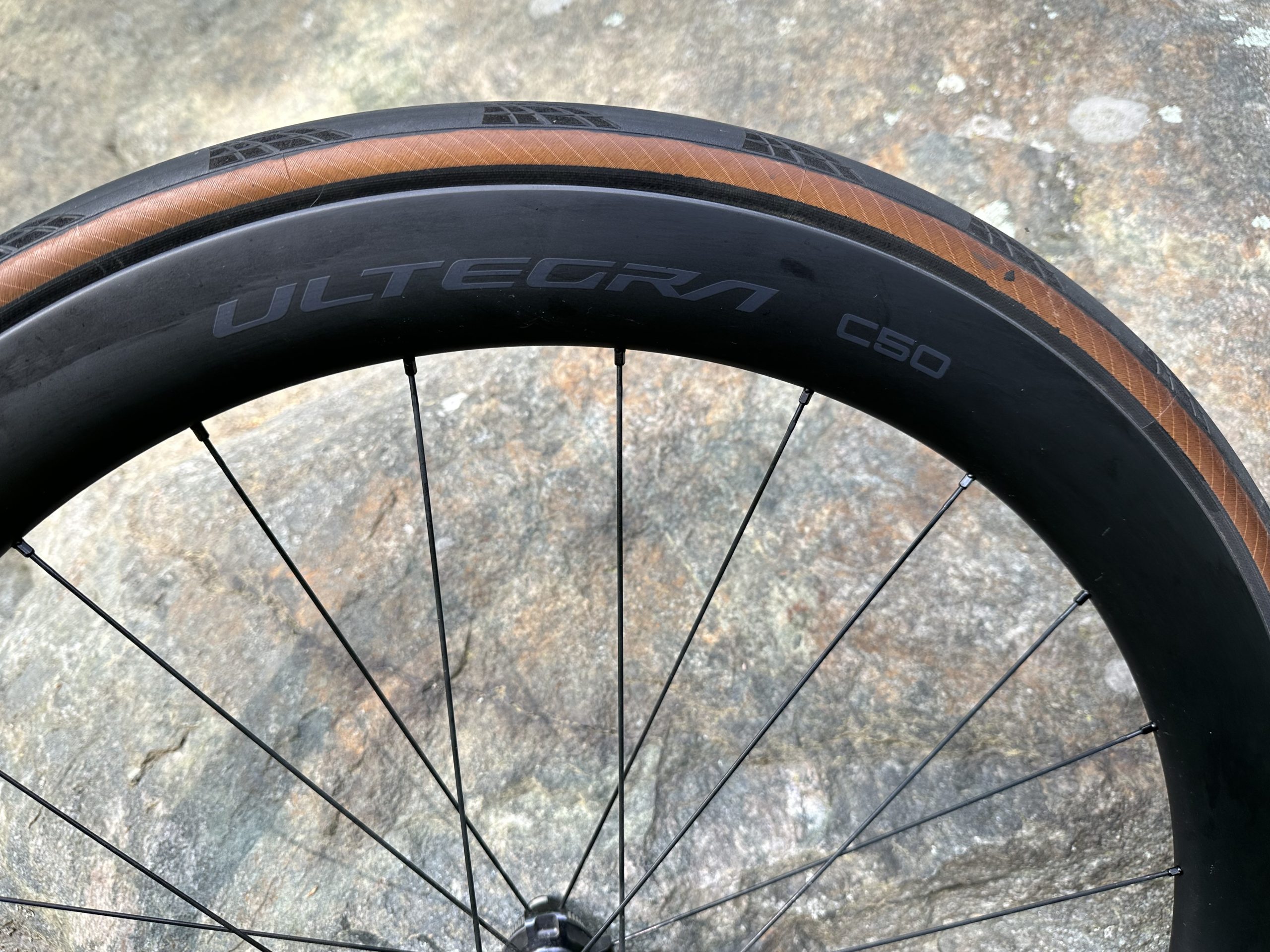
The model label is understated.
Consistent with Ultegra’s second-tier status in Shimanoworld, the C50 model labels are quite muted and hard to see on the rim’s matte black finish. By contrast, the far smaller yet bright yellow labels that sit at the edge of the rim near the inflation valve and warn you the wheels are disc brake only and not to be inflated above 109 psi stand out and don’t remove easily.
Quality: Similar to every Shimano product we’ve tested before, the Ultegra C50 wheelset overall and its components look very well made. During our testing, no issues came up. The Conti GP 5000 S tubeless tires we use on all the wheels we test also held their inflation pressure well, perhaps indicating the preinstalled rim tape job.
Of course, Shimano dealers and parts distributors far outnumber those of any other cycling brand. That’s good news when you need service or repairs. The better news is that Shimano makes amongst the most durable cycling products. If you are willing to service the cup and cone bearings yourself, you’ll likely never need to take these wheels in for service.
Price: The Shimano Ultegra C50 wheelset sells for US$1400, £1250, €1500. It and the shallower Ultegra C36 and deeper Ultegra C60 siblings can be found at these links to Performance Bike, BTD (BikeTiresDirect), Merlin, and Sigma Sports, all stores I recommend for their competitive prices, customer satisfaction, and enthusiast product selection.
Hunt 48 Limitless Aero Disc – Strengths and Limits
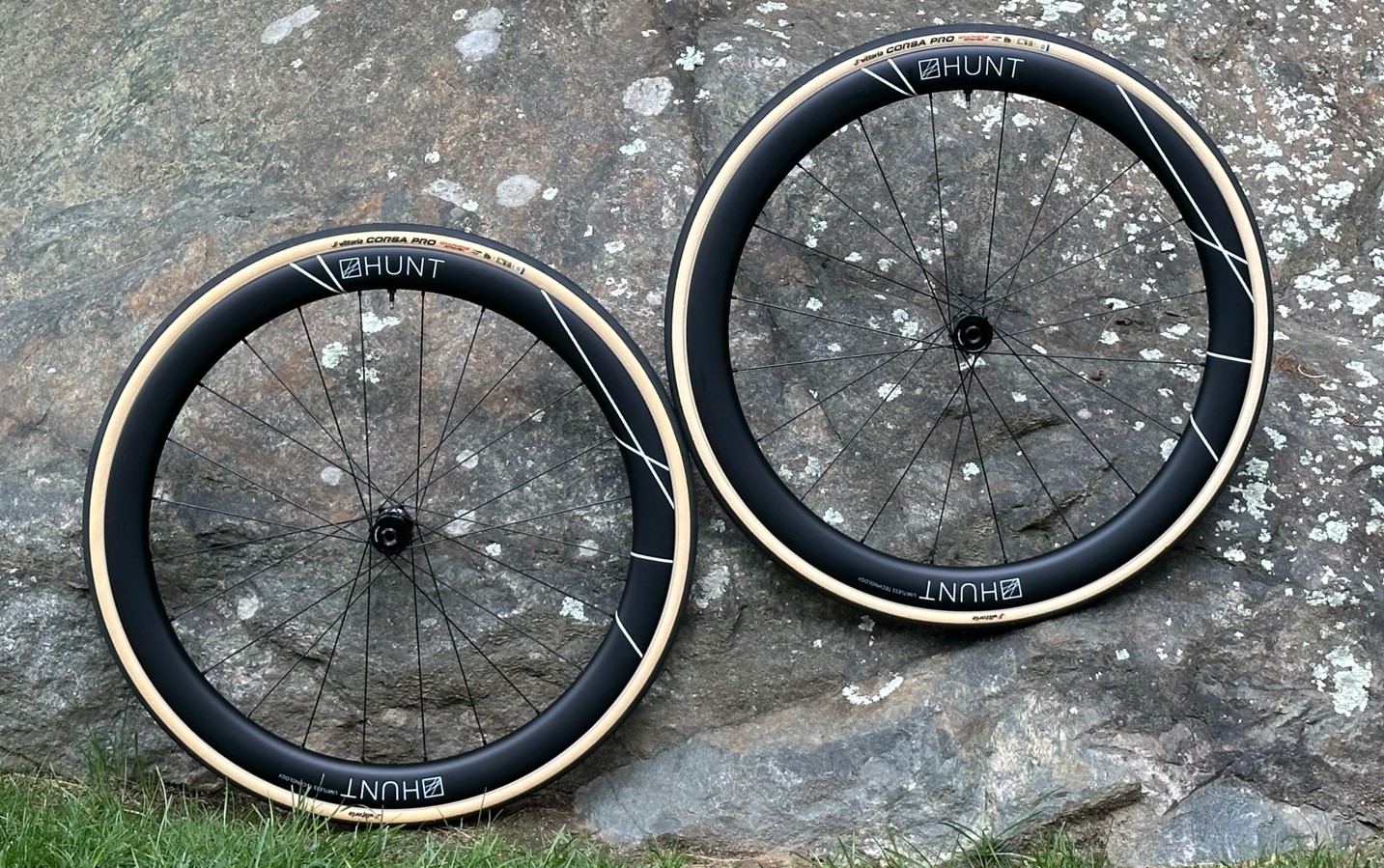
The Hunt 48 Limitless Aero Disc Wheelset generates a lot of interest. When I polled In The Know Cycling readers at the beginning of the summer of 2023, you requested we review this wheelset above all others.
With this in mind, I asked Nate and Miles, my most experienced fellow testers and very fast, accomplished cyclists, to ride and share their take on the 48 Limitless Aero’s performance.
Nate took out these Hunts designed for aero speeds on the 25mph/40kph Tuesday morning Bullet Train ride he leads, a Saturday morning A-group ride that he calls, and a few recovery rides on his Specialized Venge.
Miles raced them in crits, two hilly road races, a big day in the New Hampshire mountains, and various training rides on his Giant Propel.
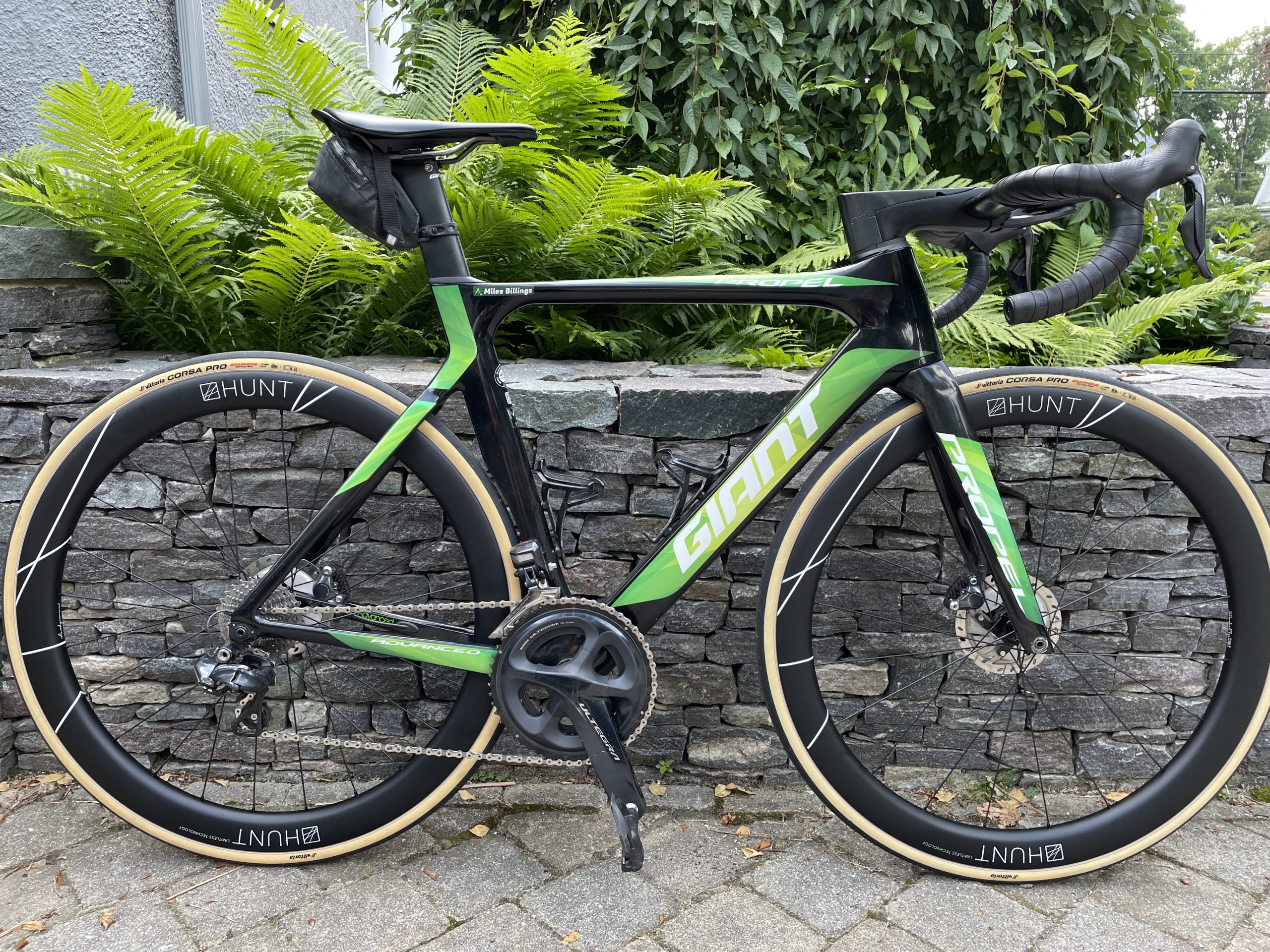
With the goal of the Hunt 48 Limitless Aero Disc Wheelset built into its name, the essential question is, how aero is it compared to the best aero bike wheels that cost a lot more and others whose depth and price are similar to these Hunts?
Neither Nate nor Miles found the wheels great aerodynamic performers on the road. Miles commented that their straight-line speed was underwhelming and that he needed to “keep on the gas” at high speeds.
While, with a rim depth of 48mm, you might not expect them to compete with those 10-15mm deeper, which hold your momentum with little effort, my fellow testers rated these Hunt Limitless no better than the average value-carbon, 50mm deep wheels for their aero road performance.
However, the wheelset’s stability in side and cross winds was very impressive. On two trips up the exposed road that climbs Whiteface Mountain in New York, the winds grabbed Miles and his bike to a degree he was unusually uncomfortable with. But the Hunt wheels were seemingly unaffected, staying planted throughout.
Of course, the speed you can get from a wheelset doesn’t come just from its aero performance in a fast crit, road race, or training ride with your nose in the wind.
The Hunt 48 Limitless Aero, a stiff wheelset, quickly snapped up to speed for Miles on flat terrain but less so when it got steep. Out of corners, up punchy short climbs, sprinting for town lines… all great and better than most value-carbon wheelsets.
Nate didn’t get a responsiveness vibe from these Hunts. As a climber and perhaps more sensitive to his gear when the road pitches up, he didn’t find that the 48 Limitless cooperated with him on even short, modestly steep pitches.
Both agreed that flat, turnier courses with some opportunities for short sprints bring out the best in this wheelset.
While the Hunt 48 Limitless Aero provides the benefits of lateral stiffness, it lacks those you get from vertical compliance – the opportunity to minimize energy losses on all but the best roads and improve the experience of a multi-hour ride.
Even with a pair of the most comfortable tubeless tires we’ve ever tested, the 28mm Vittoria Corsa Pro TLR cotton tires, installed on Hunt’s wider-than-most value-carbon wheels, the descriptors “pretty stiff,” “rigid,” and “unforgiving, bordering on harsh” came back in my fellow testers’ ride notes.
These Hunts and Vittorias do look pretty boss together. Even with black sidewall tires like the Conti Grand Prix 5000 S TR I mounted on the Hunt to measure tire width, the Limitless looks distinctively attractive.
Having experienced the noisier-than-most Sprint hubs that Hunt put on the wheels I tested before, I was curious to hear what the boys thought about the new Sprint SL hubs Hunt has put on these. While it takes a couple of 17mm cone wrenches to release the freehub from the hub axle, I greased it freely but not overzealously to offer a best-case sonic situation.
Miles reported the freehub had “an average, high-volume, tinny sound… in line with similar wheelsets.” (by which he meant Scribe). While the hubs engaged well for him, and he liked the straight-pull spoke design, he was most troubled by the skipping he occasionally felt inside the freehub or from one of the cogs slipping on its splines.
Like most wheelsets in its price range, the Hunt 48 Limitless Aero has strengths in some performance areas but weaknesses or perhaps “limits” in others.
Among other value-carbon wheelsets, Miles would choose the Elitewheels Drive 50D over the Hunts due to their lighter weight, better climbing, and similar performance on other ride characteristics.
Nate found the Hunt 48 Limitless Aero wheels to be “just average,” similar to many value-carbon wheels he’s ridden, with no stand-out qualities. While he would be OK with them if they came stock on a mid-range bike, he wouldn’t go out of his way to purchase them as an upgrade.
Design: The 48 Limitless 1639-gram weight (with no valves and an XDR hub that’s 20g lighter than an HG) is the heaviest value-carbon wheels we’ve tested, most of which are within a few millimeters of this Hunt’s 48.1mm depth.
While its 22.7mm internal rim width is a bit wider than 21-22mm span of most value-carbon wheels, its external width is far wider than the 28 to 30mm measurement common on all but one of the wheels we’ve tested in this category.
The Hunt 48 Limitless rims have a modified toroidal profile that starts at 32.0mm external width at the “brake track” and curves out to 34.7mm at its widest point before finishing with a blunt nose at the spoke edge.
That profile likely gives it the sidewind stability noted earlier but adds to the wheelset’s overall weight without adding to its relative aero performance. On frames just a few years old with chainstay clearance for tires no wider than 28mm, that nearly 35mm wide rear rim may not fit.
Quality: The wheels themselves appeared well made and had a very even matte black finish and durable-looking graphic. They came with extra spokes should you ever need to replace one.
The company has UK and US service locations and will pay for shipping on warranty claims in those and other countries.
Price: At the time of this review, you can order the Hunt 48 Limitless Aero Disc wheelset for US$1444, £1104, €1402 directly from Hunt. These prices are discounted by 15% from their regular price.
Light Bicycle AR46 – Average Performance Across the Board
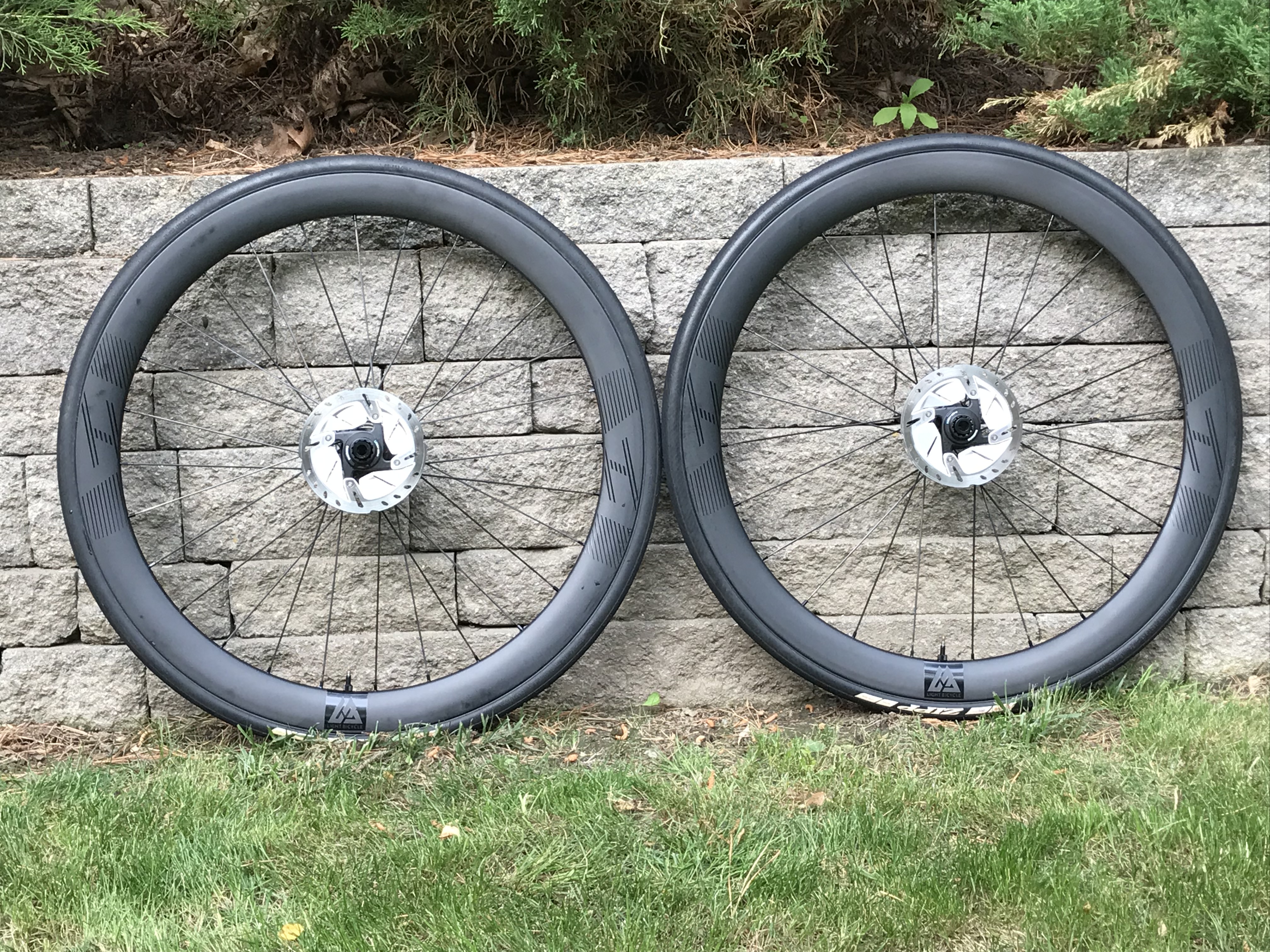
(Note: Light Bicycle now calls the WR46C02 wheelset I tested for this review the AR46. Per their representative, nothing other than the name and decals have changed. I have updated the name in this review.)
While the performance of these all-around disc brake wheels is a long way from US$2000, £2000, €2000, and up models, the Light Bicycle AR46 wheelset with DT Swiss 240 hubs offers the most average performance of any in the carbon budget bike wheels category.
That’s a qualified and perhaps confusing statement, so let me break this wheelset’s performance down to its components and comparisons.
First, it’s not on par with stiffness, comfort, responsiveness, handling, or any of the other key performance criteria of the best performing, more expensive carbon all-around carbon disc brake wheelsets I’ve reviewed. But none of the wheelsets in this category are.
Yet, while some of the wheels in this category offer performance strengths (e.g., stiffness) relative to other value carbon wheelsets only to be offset by comparable weaknesses (e.g., comfort), these Light Bicycle wheels impressed fellow tester Miles and me for doing most everything on our performance lists decently, or at least no better or worse than the average.
While not as stiff as the Bontrager Aeolus Pro 51 TLR Disc wheelset or as aero as the Scribe Core 50-D, these AR46 wheels are both adequately stiff and help hold your momentum somewhat. Though not climbing wheels, they also go uphill reasonably well and are certainly better than some of the heavyset hoops in this review.
While I have found few of these value carbon bike wheels to be in the same comfort ballpark as the performance carbon ones, the AR46 wheels were comfortable enough to run tubeless at the low end of my air pressure range and not wear me out when I did a 4-hour ride on them.
The handling was decent, the DT Swiss 240 hubs I speced the wheels with are relatively quiet and roll smoothly, and the rims managed the crosswinds predictably despite being an older V-shaped profile. Set up with 25mm Zipp Tangente Speed tires, they measured about 1 mm narrower than the outside rim width. That’s good for aero performance.
In a flat-out sprint, while not floppy, they did not feel super fast in a straight line. Instead, they seemed rather average among similarly priced wheels.
It’s also worth noting that their subtle finish is attractive. The tires went on easily, sealed with only a track pump, and held air and sealant well.
Design: This wheelset tested weighed in at 1504 grams without rim strips or valve stems. Light Bicycle claims the rims weigh 435 grams though I could not verify that. They measured 21.3mm wide between the bead hooks and 28.3mm outside.
The rims have a classic V-shape profile and use 28 CX-Ray J-bend spokes in the rear wheel and 24 in the front, both connected to external alloy nipples and the DT Swiss 240 hubs. You can have the wheels built with a list of more or less expensive hubs and spokes and choose either thru-axles end caps or quick-release skewers to fit your bike.
Quality: The wheels looked well built and stayed true during our testing. While Light Bicycle offers a 5-year warranty, it only covers the rims. Further, the company only covers the shipping costs to return the wheels to the office in Canada or China for the first 30 days of the warranty.
If you have issues with the hubs or spokes, you need to go to the manufacturers of those parts to deal with those issues. Hub warranty terms are usually a year. There are no warranties on spokes. You’d also have to pay for the wheels to be rebuilt at a local bike shop.
Light Bicycle doesn’t warranty the workmanship surrounding the assembly of the wheels’ components. When I asked about that, they offered to write a one-year warranty on the invoice but claimed they had never had the need to provide this type of warranty.
If you crash the wheels while riding, you’ll only be offered a 10% discount to replace them. Don’t like the wheel build or something else about the wheels? You’ve got 30 days to return them unused and will pay a 5% restocking fee before you get your refund.
Frankly, these policies alone make me uncomfortable buying wheels from Light Bicycle no matter how they perform.
Price: With the DT240 hubs and Sapim CX-Ray spokes I spec on the wheels I tested, the AR46 wheelset runs US$1158 if you live in North America, not including shipping. They are assembled in Canada, and duties and taxes are already built into the price.
If you live outside North America, the wheels are shipped from China. While they are priced a couple of percent less than the North American price, shipping, duties, and taxes to your location will likely make them more expensive and take longer to be delivered.
You can purchase them directly on the Light Bicycle website.
ENVE 45 – Well-Performing Value-Carbon Wheelset
Buying cycling gear or kit is easy when the choice is clear. You need (or, more often, want) something, have an idea of what it should do for you, and don’t want to spend more than a certain amount.
After looking around at what’s out there, one or two options stand out and fit your budget. You make a decision.
Easy.
Unfortunately, buying road bike wheels is anything but easy these days.
Most of us want a carbon road disc wheelset that does nearly everything well, but we can’t find one that also fits our preferred budget. So we either reduce our performance expectations to meet our budget target, increase our budget to hit our performance target or keep looking and waiting for that one wheelset that meets both targets.
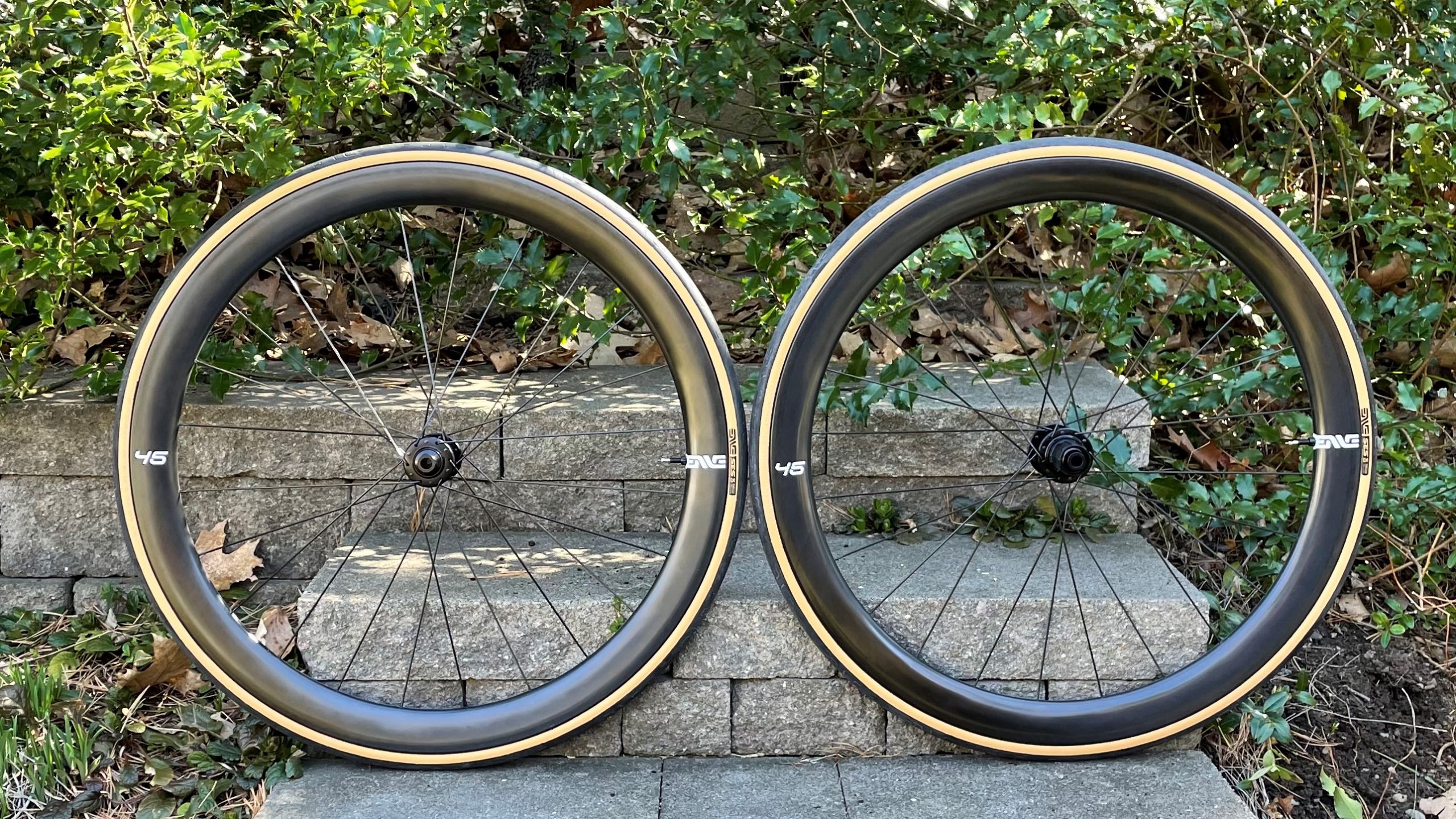
Enter the ENVE 45, a US$1400/£1800/€2200 carbon road disc wheelset from the company that makes some of the best-performing wheels that my fellow testers and I have ridden.
Before introducing the Foundation road wheel line that now includes the ENVE 45, a deeper ENVE 65 aero road wheelset (reviewed here), two gravel wheelsets, and a MTB one, all ENVE road wheels were part of the high-end crowd, I call “performance-carbon” wheelsets. As the category name suggests, it includes the best-performing wheels, but they also sell for between US$2000 and US$3000, some more.
At the other end of the range, you have US$1000 to US$1500 value-carbon wheels (reviewed here). In our testing, those give up some performance (e.g., versatility, aerodynamics, responsiveness, comfort, or a combination of the same) and perhaps design preferences (e.g., rim width, freehub noise, finish quality) and brand prestige in exchange for a lower price.
And now there’s the ENVE 45 that sells for US$1400.
While most wheelsets also line up in value-carbon or performance-carbon categories in £ or € denominations, ENVE wheels sell for far more than the exchange rate would suggest when they leave the States for reasons I can’t explain. So at £2100 and €2550, the ENVE 45 lands in the lower end of the performance-carbon price range. Sorry chaps, mates, et mes amis.
So how does the ENVE 45 rate on the performance and value?
My headline – Comparatively well-performing value-carbon wheelset from a prestige brand.
And, my sub-head – Not on par with the best performance-carbon wheels that cost a good deal more.
You had hoped for better? Me too. I was hoping for a performance-carbon level wheelset at a value-carbon price. The ENVE 45 isn’t it. Sadly, I haven’t found that wheelset anywhere as yet.
Most value-carbon wheels we’ve tested have at least one, and often several, performance weaknesses. They are best when you are willing to compromise away things that really don’t matter as much to you.
So, maybe they aren’t super comfortable unless you put on tires that are wider than the rims. But since you aren’t all about going fast, you trade off some speed for added comfort and better handling at a good price.
Or perhaps they don’t respond with the kind of snap you’d read about from lighter wheels or make it easier going uphill. But since you aren’t racing and know that losing only 2kg (4.4 lbs) in your gut rather than 200 grams in your rims would make you a lot faster and get you to the top of climbs sooner, you pass on paying a grand more for snappy and light wheels that’d be wasted on your rides.
And maybe the price is so attractive that you look away from the warranty that gives you less than a two-year term, or covers only the rims, or makes you pay to ship it to another continent if you want to make a claim after 3 months.
Compared to others in the value-carbon wheelset category, the ENVE 45 Foundation wheels perform pretty well on nearly all of my performance criteria. And they carry the ENVE brand prestige, albeit with rather understated decals on their matte black rims. Those rims are made, and the entire wheelset is assembled in the US, a point of pride and preference for some, and carry a longer-than-most 5-year warranty.
The ENVE 45 is plenty stiff and handles most terrain – flats, rollers, climbs – competently. They aren’t snappy, but neither are they slow off the mark. They don’t favor one type of terrain, like hills, at the expense of another, like flats, or vice versa. They are true “all-arounders”.
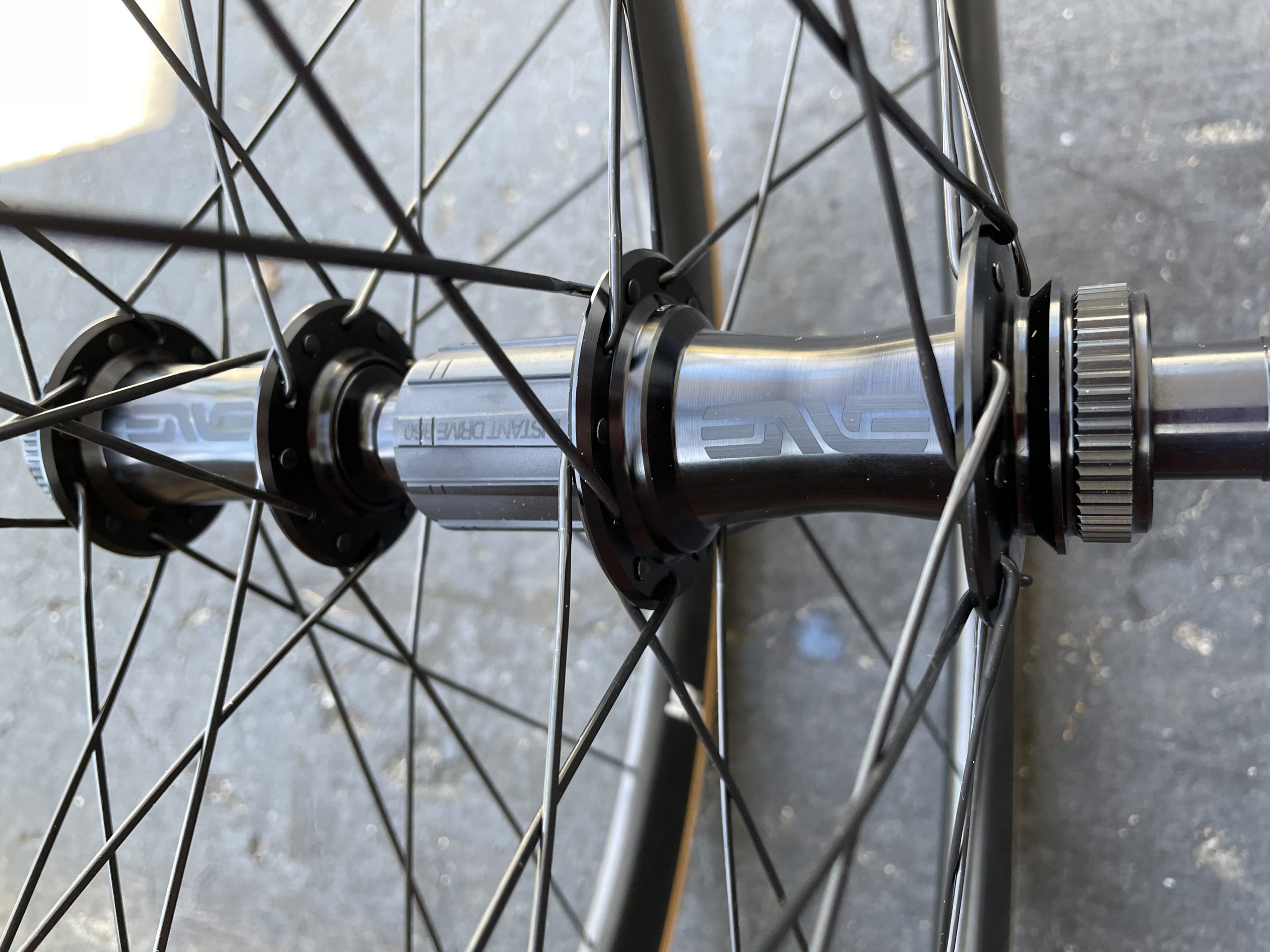
Using the same ENVE alloy shell hubs with DT Swiss-like star ratchet internals, the ENVE 45 wheelset rolls smoothly and freewheels relatively quietly while engaging as fast as you need for a road wheelset.
With the right tires, they also handle confidently. Because they use hookless rims, you can’t put every tubeless tire on the ENVE 45. But, per ENVE’s approved tire list (see here), you can use most, including many I’ve reviewed and favor (see here).
If you are committed to using 28mm wide tires, know that the Continental Grand Prix 5000 S TR and Schwalbe Pro One TLE will be two of the most aero choices among those I’ve tested once mounted and inflated to my test pressure of about 60psi will measure about the same width as the rims. And since these are hookless rims, the tire-rim intersection will be a bit smoother than one with hooks, so it won’t likely have a big, negative aero effect.
More importantly, I rode the ENVE 45 with a few different 25mm tires mounted at different pressures and couldn’t find a comfortable combination. While as fast or faster than most of the value carbon wheels of similar depth, these ENVE Foundations didn’t offer the amount of added momentum or free-speed of performance-carbon wheels of similar depth or the deeper value-carbon, 50mm deep Bontrager Aeolus Pro 5 TLR (now discontinued).
The ENVE 45 also got pushed around a bit in the heavy spring crosswinds we have in the Northeast US. Surprising for an ENVE wheelset but not much different than many value-carbon wheels.
If you are a multi-surface rider, know these aren’t gravel wheels. With a 21mm internal rim width, they really aren’t wide enough for more than smooth dirt roads where you’d use a 32mm wide tire at most. ENVE makes the AG25 (review here) which is a dedicated gravel wheelset in their $1400 Foundation range. Those have a 25mm internal rim width that supports gravel tires as wide as 45mm for the kind of comfort and handling you’d want on any gravel class.
Compared to better all-around wheels in the more expensive performance-value category, the ENVE 45 doesn’t compete. They aren’t as responsive, don’t hold their speed as well, aren’t as impervious to crosswinds, don’t climb or handle any better, and are generally less compliant (comfortable).
But, you may be wondering, how is this possible? After all, this is an ENVE wheelset!
Well, I’m not an ENVE wheel designer or product manager and don’t speak for the company (or republish their media talking points as part of my reviews). I will note, however, that they don’t use the same carbon layup, more bulbous front rim shape, and different front and rear widths and shapes on the ENVE 45 as they do on their performance-carbon road wheelsets.
Their most popular road wheels, the ENVE SES 4.5 and 3.4, also have a 25mm internal rim width that makes them versatile enough for road and gravel and, along with their superior carbon layup, more comfortable.
And hey, if they were to make the $1400 ENVE 45 wheelset perform as well as their $2850 and up performance-carbon wheels, they wouldn’t give those of us willing to pay for top performance a reason to do so.
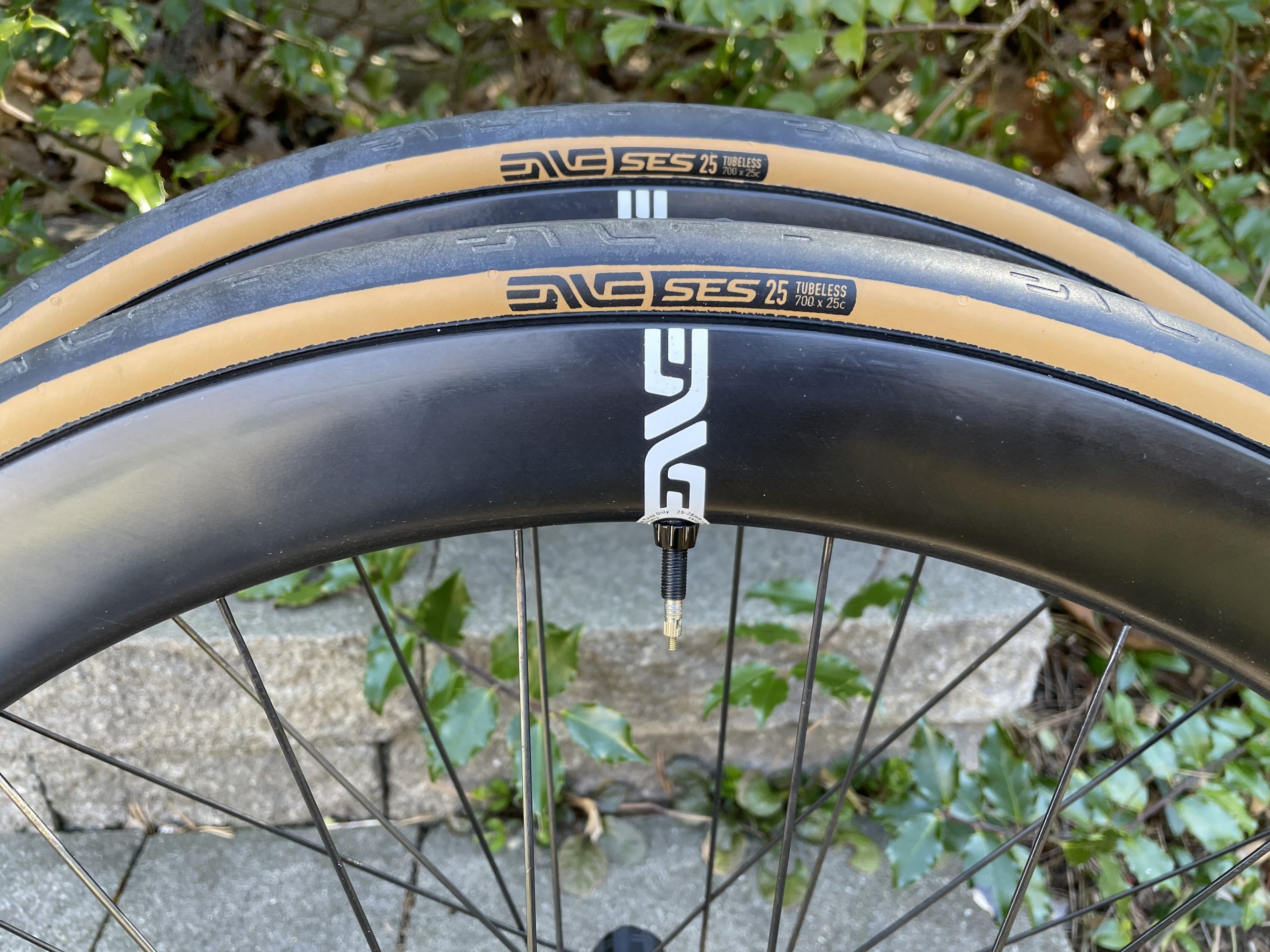
But, if you are looking for a value-carbon wheelset that does most everything as well or better as others in this category, carries a bit of brand prestige and a superior warranty, and you are willing to pay a few hundred more for all of that, then the ENVE 45 is a good choice.
Check the ENVE 45 wheelset pages using these links to Performance Bike, BTD (BikeTiresDirect), Merlin, and Sigma Sports.
Bontrager Aeolus Pro 51 TLR – Quiet, comfortable, but lackluster
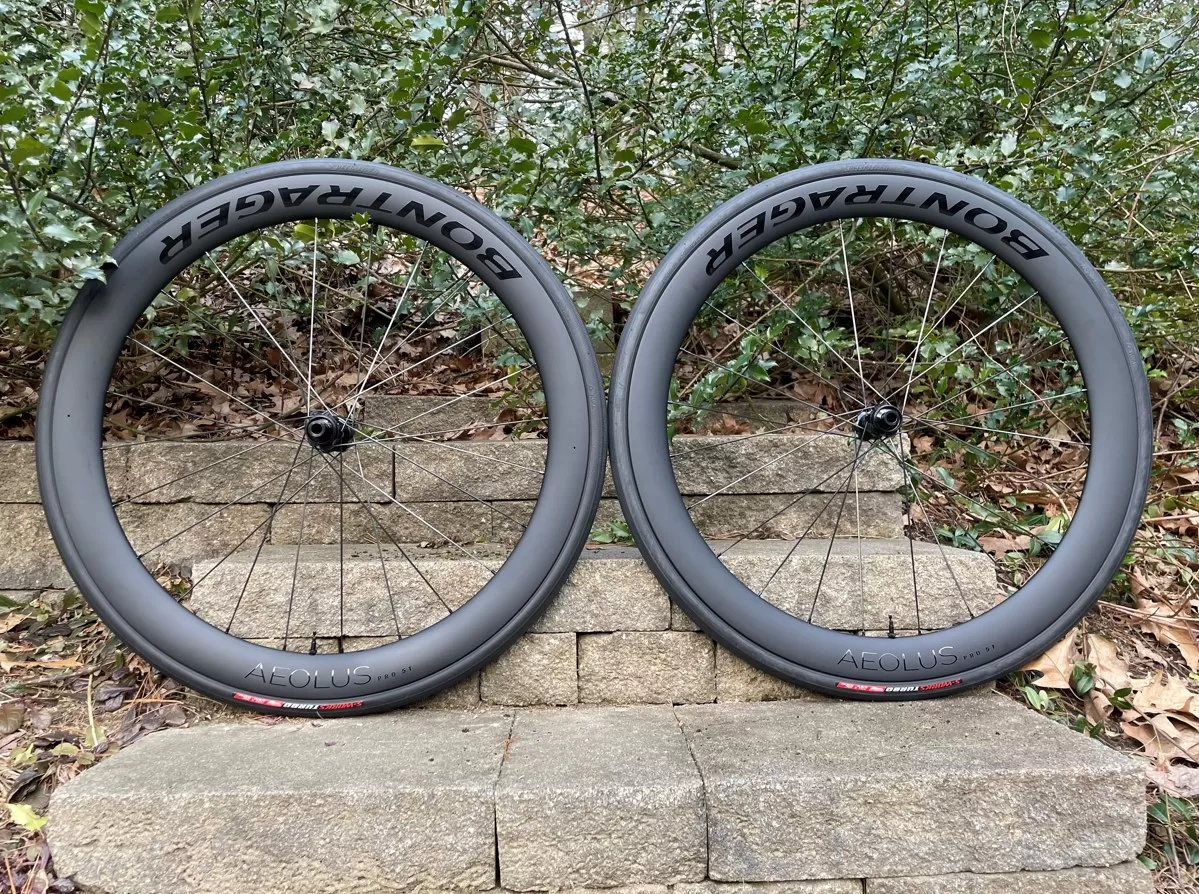
I had high hopes for our testing of the US$1500, £1250, €1800 Bontrager Aeolus Pro 51 TLR wheelset. We rated its shallower and similarly priced sibling, the Aeolus Pro 37, one of the best value bike wheels for its capable range of performance. And our review of the Aeolus Pro 51’s more expensive twin, the Aeolus RSL 51, which shares the same rim profile, carried the headline: The Definition of an All-Around Road Disc Wheelset.
I, and probably many of you, keep looking for that value-priced wheelset that rides nearly as well as one that costs twice as much. Using a set of performance criteria (not specs) to evaluate wheels, my fellow testers and I have ridden over a dozen value carbon road bike wheels (and another half dozen gravel ones) over the last few years in search of one that would save you a bucket full of money without giving up more than a shot glass worth of performance.
Unfortunately, the Bontrager Aeolus Pro 51 isn’t it.
Like all but a few wheelsets in this price range, the Pro 51 performs adequately in some areas and less so in others. From the rides that fellow tester Nate and I did, the Pro 51 doesn’t match or approach the overall performance we enjoyed of its RSL 51 sibling or the balance of good performance across areas like its shallower Pro 37 kin does.
Comfort is the Aeolus Pro 51’s biggest strength. Its wide rim profile allows you to run 28mm tires without sacrificing aero performance while keeping the pressure low enough to soak up the bumps on paved, poorly paved, or unpaved roads quite nicely.
True, the right tire and pressure are a big part of enjoying a comfortable ride these days. But I’ve ridden enough wheelsets, especially in the value carbon price range where the rim/spoke/hub component choices, lacing, or assembly don’t enable enough vertical compliance in the wheels for a comfortable ride regardless of the tires and range of pressures I tried.
The Pro 51 felt planted in corners though accelerating out of them was underwhelming. They’re stiff enough to confidently get you through but not responsive enough to get you flying out.
That lack of responsiveness also showed up during acceleration efforts. They were not at all lively. It took a lot of effort to get them up to speed.
Once up to speed, it took more effort to keep them there compared to the best wheels at this price point and more expensive ones. That was disappointing since the Pro 51 uses the same rim shape as the RSL 51.
While aero performance, which we judge based on our ability to maintain momentum in the 20-25mph/32-40kph range for the RSL 51, was good but not exceptional compared to top-performing all-around, the Pro 51 isn’t on par with the RSL 51.
The common rim profile gene did show up in the Pro 51’s good stability in side winds. That’s a welcome benefit if you ride where it is regularly windy.
Climbing with the Pro 51 was a drag, figuratively and literally. Even riding a course with rolling hills took more effort than a wheelset this depth should. 7% grade climbs put me in the hurt locker the way 10%+ ones normally do.
All of this made me feel like I had “dead legs” when riding the Pro 51. I do get those days regardless of the wheelset and certainly feel that way when trying to climb or ride aggressively on most 60mm deep wheels rather than the straight flats they are designed for. But I should feel better than that on a good set of all-around wheels of the Pro 51’s depth and profile.
Nate put a finer point on it, saying the Pro 51 wheelset’s responsiveness was “dull.”
Design: The Aeolus Pro 51 measured weight of 1625 grams likely contributes to its relative lack of responsiveness, acceleration, and climbing ability. That measurement is with about 15 grams of tubeless rim tape and no valve stems. If you instead install the 60-gram per wheel plastic tubeless strips that Bontrager includes in the box, well, we’re getting into stock wheel weight territory.
Even with the TLR rim tape, the Pro 51 is almost 200 grams more than the RSL 51 (1441 grams measured) and even 50-100 grams more than my top-rated aero wheels, which are 10mm deeper and more aero.
I don’t know how much of that extra weight is in the rims where it matters most vs. in the hubset. Bontrager uses the DT Swiss 350 hubs in their Pro line of wheels, which, while heavier than the DT Swiss 240 EXP, are infinitely quieter. Quieter, as in absolutely silent.
While there may be a performance difference between the 240 and 350, I can’t feel it on the road. But I sure do notice the solitude of a quiet freehub.
As mentioned, the Pro 51 rims are wide, measuring 23.2mm inside and 31.0mm outside, with an actual depth of 51.5mm.
Quality: The matte-black rim finish on my tested set didn’t clean up very well. No matter what I tried, the finish looked quite blotchy. While you don’t buy matte-black rims for their finish, and the blotchy look is only visible when you look closely in the right light, it’s disappointing nonetheless.
Bontrager’s service policies should cover this issue. You can ride (and clean) the wheels and still get a full refund within 30 days of your purchase if you decide you don’t want to keep them. They also come with a lifetime materials and workmanship warranty.
The crash replacement policy for these and all of Bontrager’s carbon wheels is decent, if not the best. They will replace or repair your wheels for free within two years of you buying them if you damage them while riding.
As they are owned by Trek, which has one of the largest dealer networks, you can take your Bontrager wheels to any bike shop that sells Trek products for warranty or crash replacement service.
Price: You can use these links to order the Bontrager Aeolus Pro 51 TLR wheels direct for US$1500, £1350, €1750 from Bontrager and Sigma Sports.
Roval Rapide C 38 Disc – Stiff, uncomfortable, and twitchy
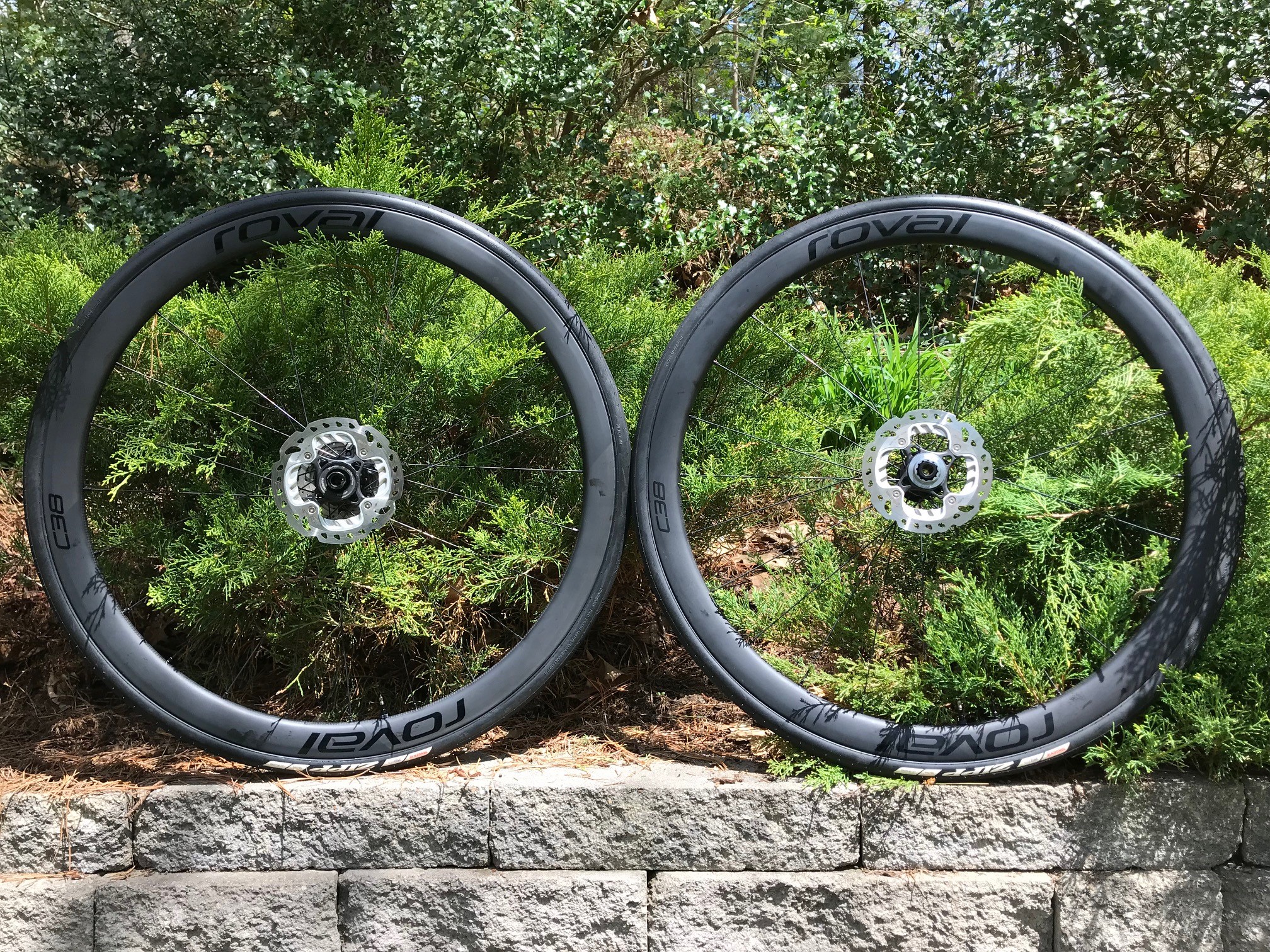
The Roval Rapide C 38 disc is made only for disc brake bikes but is marketed for use on both paved and gravel surfaces. I only rode these wheels on paved roads, albeit some that were similar to a well-maintained dirt one.
For Roval’s sake, I hope the C 38 does better on gravel surfaces than what I experienced on paved roads.
Despite its modern 21mm internal rim width, I couldn’t find a tire pressure at which it rode comfortably. On smooth paved roads at 60 psi where I normally ride 25mm tubeless tires on rims the width of these (26.9mm outside width), my 150lb body found the C 38’s comfort no more than acceptable.
On chip-seal roads where I test-rode the wheels with tire pressures from 55 psi up to 75 psi, it was harsh to the point where I was backing off my speed to reduce the vibration.
Why not use 28mm or wider tires to improve comfort? If you prioritize comfort, you should.
But I was trying to test Roval’s claim that the C 38 “outperforms many deeper, aero-specific rims that cost twice as much.” Setting up the C 38 wheels with 28mm tires would make the tires wider than the rims, going against a basic guideline of wheelset aerodynamics.
Even with the 25mm tires on these Rovals that made the rims marginally wider than the inflated tires, I had to work harder to maintain my speed than with deeper value carbon wheelsets (and performance carbon ones “that cost twice as much”) while doing intervals in the 20 and 25mph range.
And while I shouldn’t expect a 38mm deep wheelset would be more aero than a 50mm deep one, this confirmed that Specialized’s C 38 version of a 38mm deep wheelset isn’t an exception.
The C 38 also got pushed around by steady 10 mph crosswinds. While it was disappointing that a relatively shallow budget bike wheelset would be so easily affected in these modest breezes, I was even more surprised at how twitchy and hard to control the wheelset was going downhill at 30mph in these crosswinds.
I did find the C 38 quite stiff and handled very well on good paved surfaces. While there was no snap when I accelerated, they responded on par with the deeper 45mm and 50mm value carbon wheels I’ve been testing, most of which are also not rubber burners.
There’s no denying the C 38 comes at a good price from a company whose dealer network through parent Specialized offers great service and support. Despite all that goodness, its better-than-most stiffness, and confident handling performance, these wheels weren’t fun to ride and held me back from going as hard as I normally would.
At the end of the day, that’s what matters most to me.
Design: I measured the wheelset I tested at 1608 grams, including the rim strips but not the valves. The rims measured 38.0 mm deep, 21.3mm inside, and 26.9 mm outside on the U-shaped rim.
DT Swiss has been known to make complete stock wheels under the Roval brand name for parent Specialized’s bikes and may also be making the C 38. The wheels come with round DT Competition Race spokes, 24 both front and back attached by brass nipples, and use a DT 370, 18-tooth hubset.
Quality: Roval provides the original owner with a lifetime material and workmanship warranty. If you buy the wheels from the original owner, Roval will still stand by them for two years from the original purchase. This is unique. I’ve not seen many “second owner” warranties other wheelset sellers offer.
The 2-yr free repair or replacement crash replacement policy covers the original owner if the wheel is damaged while riding.
Price: The Roval Rapide C 38 sell for US$1100, £900, €1160 at these links to recommended stores Performance Bike and Sigma Sports.
Yoeleo SAT C50|50 DB PRO – Laterally compliant, vertically stiff
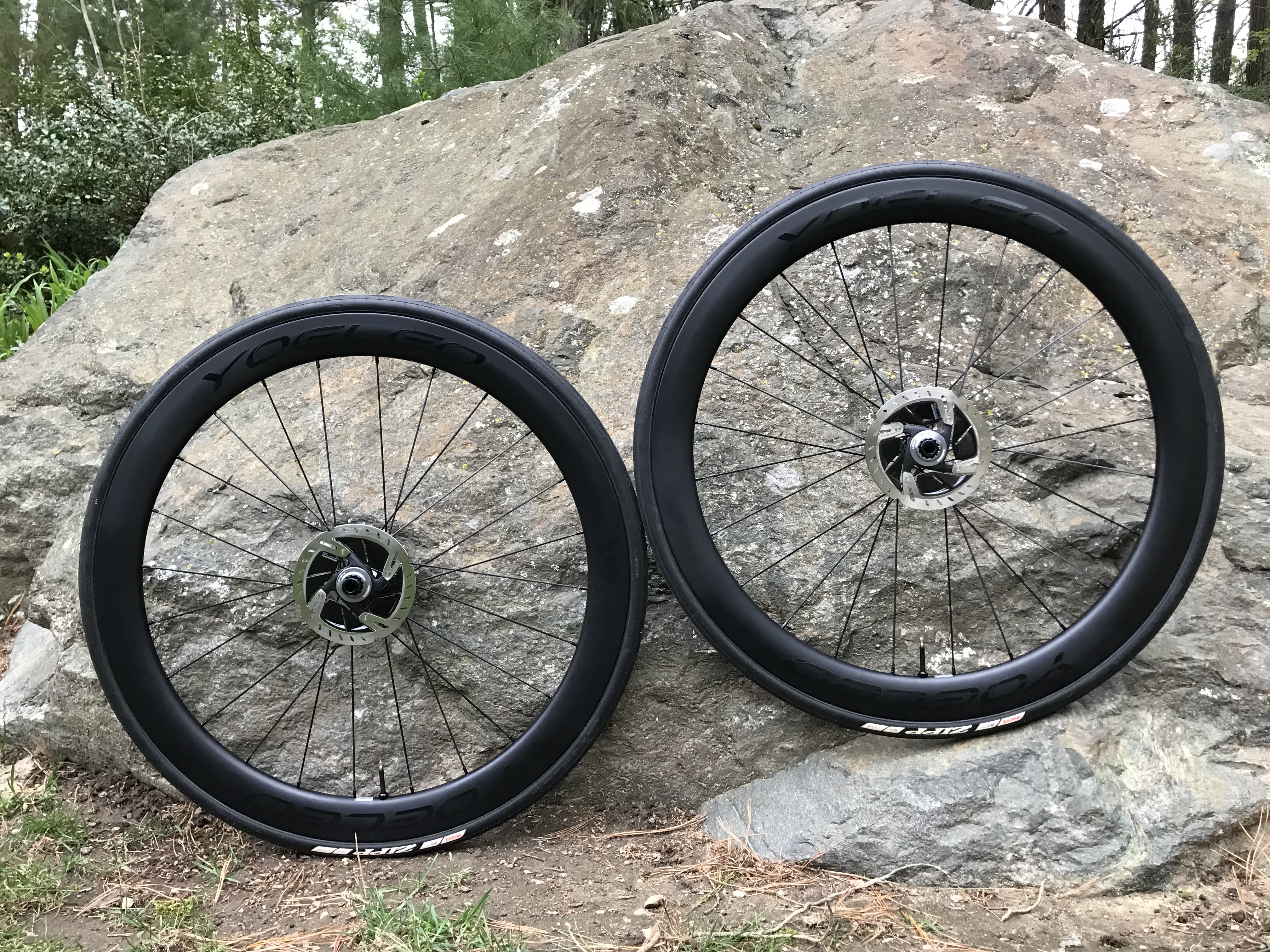
While most roadies like a laterally stiff wheelset that transfers power efficiently to the road that is also vertically compliant to help cushion imperfectly paved roads, I found the Yoeleo SAT C50|50 DB PRO underperformed the better value carbon wheelsets on both measures.
As a lighter and, therefore, less powerful rider, I’ll typically have to work hard climbing and sprinting to notice stiffness differences. With this Yoeleo wheelset, I noticed them right away. Compared to nearly every other value carbon wheelset I’ve tested, the SAT C50 felt imprecise pedaling up the first modest hill I hit within a mile of my house.
When I increased the tire pressure by 10 psi, they rode a bit stiffer though they still weren’t stiff. Lowering the pressure the same amount didn’t really improve the comfort.
The handling did improve at higher pressure, but that’s more likely due to the tires than the wheels.
After many rides at different pressures and considering the tradeoffs, I rode them about 5 psi higher than I normally ride. This seemed to get me the best performance balance between stiffness, comfort, and handling for these wheels. Unfortunately, the Yoeleos still underperformed on all three of these criteria.
Strangely, however, the balanced underperformance seemed easier to get used to over time than wheelsets that were good performers on one of these criteria, say stiffness, and subpar performers in others, for example, comfort.
While 50mm deep and with the good DT Swiss 240 hubset I specified for these test wheels, the SAT C50 didn’t feel particularly fast or helpful in maintaining aero speeds. While weighing only 1459 grams, quite light for any road disc wheelset of this depth, they didn’t climb or accelerate markedly better than the heavier, stiffer carbon budget bike wheels I tested for this comparative review.
Design: The Yoeleo SAT 50|50 DB PRO would seem to have all the specs to make it one of the better-performing wheelsets. My conclusion that it is a below-par performer further proves that you can’t go on specs in predicting how well a wheelset will ride out on the road.
My 50.2mm deep test wheels weighed 1459 grams which compares favorably to the claimed weight of 1518g. Unlike many lower-priced carbon wheels that use Toray T700 standard modulus fiber, Yoeleo uses the higher modulus, higher tensile strength Toray T800 intermediate modulus carbon fiber for these wheels. With all else being equal (rim wall thickness, spoke bracing angles, hub flange diameter, etc.), this should give the wheels a higher strength-to-weight ratio and make them stiffer than what I experienced. Clearly, something wasn’t equal.
The rims have a classic toroid profile even more pronounced than the original Zipp 303, which was one of the originators of this shape. These Yoeleo wheels measure 26.0mm wide at the brake track and 27.7 mm at their widest point. The internal rim width between the bead hooks is a healthy 18.5mm, narrower than the 21mm inside width you find in most of today’s value carbon wheels.
You can also order the wheels with a 25mm outside width (unspecified inside width), though I don’t know why you would.
While the wheelset I specified for this review had DT Swiss 240 hubs with Sapim CX-Ray spokes, the latest model SAT C50|50 DB comes with Pillar Wing 20 spokes and the option to specify Yoeleo brand 230 hubs for $400 less. You’ll also find Pillar spokes on wheels made for brands including Scribe and Hunt. I have no experience with Yoeleo brand hubs.
Quality: Yoeleo’s service policies are quite limited. They offer a 3-year warranty against defects but only cover the shipping costs for the first three months should there be a problem. And you’d need to ship the wheelset to China.
If you decide you don’t want the wheels after they first arrive, you have just three days to inform Yoeleo that you want to return them, and here again, you pay for shipping. They offer no crash replacement policy.
My test wheels arrived true and looked well built. While I rode them for less than 1,000 miles, I encountered no quality issues with them during that time.
Price: Currently, the SAT C50|50 DB sells for US$1300 with DT Swiss 240 hubs. You can buy them directly from Yoeleo.
PERFORMANCE DIFFERS BY WHEELSET TYPE
I’ve heard some riders and marketers say that a set of US$900-1500 carbon wheels, what I call a value carbon wheelset, get you 80%-90% of the performance of the best or performance carbon wheels at 1/2 to 1/3 of the price.
While it’s a memorable line, it lacks the context to make it useful and accurate.
It’s really hard to make any overarching statement like that without knowing, for example:
- Which value carbon wheels and which performance carbon wheels are you comparing?
- Which performance characteristics are you considering?
- Which characteristics are most important to you in making a wheelset decision?
As you likely know and can see on the home page, my fellow In The Know Cycling testers and I write reviews that compare a half-dozen or more wheelsets intended for a similar purpose and put them into a single post for you.
For example, which are the best climbing or all-around or aero wheelsets? Which are the best rim brake upgrade or gravel bike wheels? And how do you choose between those categories to find the best for you?
While performance characteristics are unique to each category or more important when comparing wheels in some categories versus others, there are a handful of characteristics that are important across all categories.
Most of the value carbon wheels I am reviewing in this review in my search for budget bike wheels or value bike wheels are all-around category wheels. This category includes mid-depth (40-50mm) wheelsets that are intended for training and road racing, on the flats and in the climbs, mostly on the road, but also for a modest amount of cross or dirt riding off of it.
As the “all-around” description suggests, these wheels should be good in most situations if not ideally suited for one specific terrain (e.g., climbing), event (e.g., time trials), or surface (e.g., smooth, paved roads).
The performance criteria I and my fellow testers use in search of the best value bike wheels and the best in most other categories to a greater or lesser degree are versatility, specificity, aero drag, sidewind stability, lateral stiffness, vertical compliance (aka comfort), and responsiveness.
You can read more about what I mean by each of these on my wheelset selection criteria page.
In this section, I’ve compared some of the better and average value-carbon wheels against some of the better and average performance-carbon wheels that cost much more and alloy upgrade wheels that usually cost less.
This is a fool’s errand, but I’m a fool and am trying to provide you a general reference point of what to expect for a specific performance characteristic between the wheelsets we’ve tested representative of these three different groups. This will hopefully be better than the horribly inexact and simplistic “x% of the performance at y% of the price” that some people lean on.
I’ve no doubt that I will get comments from some of you saying your $500 alloy wheelset is good enough for you to perform just as well or better than those you ride with or race against who use a $3000 carbon wheelset. I won’t try to confirm or explain why your experience or evaluation differs from mine other than to say there might be some other things to consider beyond just the wheels in such a comparison.
My fellow testers and I have ridden, compared, and reviewed many, many wheelsets. You can read and compare my take on whatever wheelsets you are interested in by entering the wheelset name in the “Find a review…” box at the top of the page.
Rather, what follows is a distillation of our experience.
Versatility
 (Comparative Performance Key: + Better, 0 Average, – Worse)
The most desirable all-around wheels will give you the versatility to ride, without making major performance compromises, on different types of terrain (hills, flats, false flats, straights, corners, sprints, mountains, fast downhills, windy roads, paved and unpaved) that you’ll experience and a range of training and events (club races, centuries, club, charity, group rides) you’ll want to do.
Performance carbon wheelsets clearly have an advantage here. The better and many of the average wheelsets are more aero, responsive, and comfortable, and climb better than value carbon or alloy upgrade wheels we’ve ridden. That makes them more versatile for the range of terrain you might ride, events you might do, and surfaces you might traverse, especially if you are comparing the more modern disc brake wheelsets.
The better and average carbon budget bike wheels I’ve tested are somewhat more versatile than the better and average alloy upgrade wheels. Being deeper and with good hubs, they are better at holding aero speeds above 20mph/32kph. In quite a few cases, however, that comes with crosswind management issues that you don’t experience with the shallow alloy upgrade wheels (or the more advanced rim profile designs of the performance carbon all-around depth wheels).
While most of the value carbon wheels are wider than most of the alloy upgrade wheels, I haven’t found the former group to be any more comfortable. This limits your desire to want to ride them off-road (and in some cases on them).
To fill out the versatility consideration, I think about how much I’d like to climb with these wheels. The value-carbon wheels are generally a bit heavier than the performance-carbon ones. Others are not as stiff. I haven’t found any that are as light and stiff as the better and average performance-carbon wheelsets.
Alloy upgrade wheelsets, though shallower than value carbon ones aren’t noticeably lighter and often not as stiff. This limits their versatility.
Specificity
(Comparative Performance Key: + Better, 0 Average, – Worse)
With less engineering put into value carbon wheels than performance carbon ones and almost none going toward alloy-upgrade ones anymore, it’s unlikely that you’ll find terrain, surface, or discipline-specific wheelsets that perform at the same level as performance carbon ones outside of those from that category.
Value carbon wheels often have some combination of older rim profiles, lower-spec carbon layups, or less advanced hubs. From a performance sense, this makes them less aero for flats and speed disciplines and heavier for climbing and many road racing ones than performance carbon wheels. They’ll also usually not have as wide to enhance comfort or as stable in side winds.
Modern alloy wheels, for the most part, aren’t designed for specific terrain, surfaces, or events. The limitations with shaping the rims and the added weight that comes with a wider or deeper rim remove them from the ability to compete on specificity.
Aerodynamic Drag and Sidewind Stability
(Comparative Performance Key: + Better, 0 Average, – Worse)
With few exceptions, this is quite clear-cut for understandable reasons. The better and even average performance-carbon wheelsets tend to invest more engineering in developing more aero and stable rims in the normal 0 to 10-degree yaw angles and 10mph+ sidewinds than value-carbon ones.
Depending on the company’s strategy and business activities (see the next section for more about this below), value carbon wheels often come with rim designs used in earlier generation performance carbon wheels made by the same company or are copies of those designs from companies choose to underinvest in product development as part of their strategy to be able to sell less expensive wheels.
Alloy upgrade wheels are typically in the 25mm +/- rim depth. This makes them about 20-25mm shallower than value carbon and performance carbon wheelsets. At aero speeds, you will notice that depth difference. On the flip side, many of the value bike wheels with their older designs aren’t as stable in sidewinds as lower profile alloy upgrade wheels.
No, I don’t test wheels at the In The Know Cycling wind tunnel. (Sadly, there isn’t such a thing.) Instead, these observations are anecdotal and based on how well I and my fellow testers find each wheelset maintains its momentum in the 20mph/32kph to 25mph/40kph range and in varying wind conditions.
Lateral Stiffness
 (Comparative Performance Key: + Average, 0 Par, – Worse)
Stiffness is a performance characteristic that is specific to a wheelset. Some are stiffer than others, regardless of the category of wheels they might fall into. There are plenty of stiff wheels that transfer your power efficiently within each category and at each price point and plenty that don’t.
You can see which wheelsets are stiffer in the charts summarizing and comparing performance within each category review.
Vertical Compliance (aka Comfort)
 (Comparative Performance Key: + Better, 0 Par, – Worse)
Comfort is relative and very much in the eye of the beholder, or should I say, in the hands and rear end or the biker. We used to ride around on 15C wide alloy wheels pumped up to 120 psi with nary a complaint about comfort.
Now, the focus on comfort seems to be a sub-industry unto itself, with some tires and wheels sold on the premise that their width will provide you with all the comfort you need.
A few things to point out first. Comfort is an outcome of a wheelset’s vertical compliance, what tires you use, and how much you inflate them. You can make a wheel more or less comfortable by running it tubeless, using better tires, and lowering the pressure.
But you can only do so much to make a ride comfortable, given your wheelset’s compliance. The wheel’s rim determines vertical compliance, spoke, and hub design and materials and how they are aligned and assembled or work together toward the compliance goal.
All the marketing around a wider rim making for a more comfortable ride is misleading. If everything I’ve written above is the same between two wheels, a wider rim on a wheelset will be more comfortable. But, all else is never the same between wheels from two different companies, and there’s often enough difference that width isn’t the dominant factor in determining comfort.
Indeed, I’ve found some of the old 17mm wide (internal) value carbon wheelsets with 23mm tubed tires inflated at 75 psi were more comfortable than some of today’s 21mm wide (internal) budget bike wheels with 25mm tubeless tires inflated at 60 psi ridden on the same roads.
While it is unusual to find that situation, it illustrates the point that wheelset width alone does not predict comfort. Vertical compliance, tire choice, and inflation pressure do, and there’s no way to predict compliance from specs.
Some wheelsets with essentially the same rim widths and tires, say 21mm inside and 27mm outside, with a 28mm tire inflated to the same pressure, will be notably more or less comfortable than others. So it’s just not about the rim width.
For those of you focused on tire width, also know that aero performance, handling, and comfort are interdependent. You just can’t put on a set of 28mm tires to improve comfort without potentially affecting your aero performance and handling. I wrote this post about that subject. And, one brand’s 25mm or 28mm tire can be a millimeter wider than a 25mm or 28mm tire from another brand, and both are almost never going to be as narrow as the labeled tire width once mounted and inflated on your wheels.
So what about the vertical compliance of the three different groups of wheelsets?
Like stiffness, a lateral measure that is also dependent on the wheel’s rim, spokes, and hub materials and how they are aligned and assembled, vertical compliance is unique to a wheelset.
That said, I’ve found the better and average performance carbon wheels as a group of individual wheelsets to be more comfortable than either better and average value carbon or alloy upgrade wheels.
I’m not sure why this is, but I guess it simply results from money. More engineering goes into performance carbon wheels than either of the other types. Companies are hip to the reality that we cyclists want comfort today so the companies making performance carbon wheels spend the money to engineer their wheels to be more compliant. The others either can’t afford to or don’t choose to.
Responsiveness
 (Comparative Performance Key: + Better, 0 Average, – Worse)
Responsiveness is a measure of how quickly a wheelset accelerates from a stop or when you attempt to accelerate while underway from one speed to a much faster one. You accelerate most often after slowing at a stoplight or sign or coming out of a turn. If you race or group ride, you might accelerate to start a breakaway, move past someone slowing in front of you, kick it in on a hill, or when doing a sprint for the town line or finish line.
I’ve found that performance carbon wheels are some of the most responsive around. This certainly isn’t the case with all performance carbon wheels, but I’ve seldom found value carbon or alloy upgrade wheels to be as responsive.
You might wonder, if stiffness is wheelset specific, why wouldn’t responsiveness be as well? It’s hard to pinpoint exactly why for a given wheelset but some combination of stiffness, aerodynamics, weight, carbon layup, hub engagement, spoke lacing, and perhaps other factors will determine how responsive a wheel is when you accelerate. Performance carbon wheels are typically some combination of a more aero rim profile and a lighter wheelset and use higher-grade carbon in their rims or better hubs than either value carbon or alloy upgrade wheels.
Value carbon wheels are usually more aero but heavier than alloy upgrade ones. This might explain why I’ve found little difference in their responsiveness.
APPROACHES DIFFER TO DELIVER VALUE
There are two dimensions along which I organize the companies that compete to make the best value carbon wheelset.
SCOPE – By scope, I’m referring to the range of business activities and operations, the number and range of products, the breadth of the cycling market segments served, or countries and geographies the companies sell to. Those selling carbon budget bike wheels either have a broad or focused scope.
SALES – Companies today sell wheels (and most cycling products) through dealers, either online or at shops that represent them or both, or directly to cyclists from their own company websites.
Companies combine their scope and sales approach to follow one of four primary strategies shown in the chart below. You can read about each of these strategies in more detail here.

1. Integrateds
Integrateds themselves do the activities or actively manage what others do integral to designing, producing, selling, and servicing wheels. They all use distributors and sell principally through online or shop dealers, though they increasingly also sell direct-to-consumer from their company stores.
Since Integrateds build wheels in advance and their distributors buy and stock the wheels for their dealers, you can usually order and get value carbon wheels from them immediately or within days, the time it takes the order to ship to you from an online store or from a dealer to a local bike shop.
All the Integrateds sell more expensive performance carbon wheelsets, certainly a greater range and, for some, a larger number than the value carbon wheelsets they sell.
These companies do the research, design, and testing that goes into the rims and, in many cases, the hubs they sell. Many make, assemble, and QC their own wheels. Others have contractors do the actual production for them using production facilities and molds they own and are dedicated to their wheelsets. As Integrateds, they define and oversee the material, construction, assembly, and testing methods that go into making these wheels.
2. Regionals
Regionals use a similar selling approach to the Integrateds, mostly using online stores and local bike shop dealers but also through sales from their web stores. They sell a far smaller range and number of products than the Integrateds, with wheelsets usually being their primary focus. Most also sell performance carbon wheels and wheelsets for mountain biking, cross, and gravel segments.
These companies design their rims and some of the hubs used in their wheelsets. They own their rim molds but mostly have others do the production of their wheelsets in facilities where they don’t have ownership.
As the name suggests, Regionals sell through dealers or directly to cyclists in a specific geographic region. The value carbon wheels I’ve evaluated in the past for this review have been replaced by newer models. I’ll work on getting some of those in for testing and add them to this section.
3. Branders
Branders build their businesses around a name that customers come to recognize and equate to the brand’s seemingly unique attributes and benefits. The value of these brands in the minds of cyclists allows the companies to successfully sell their products directly rather than needing the value a distributor and dealer network can bring by promoting the company’s wheelsets through their own brand, sales, and marketing efforts.
The wheelset Branders I’ve found didn’t start with rim or hub expertise to design or engineer their own wheels. While some claim to have built that expertise, they still depend largely on their ability to source the design and manufacturing of the wheels they sell from others to fill the unmet needs of cyclists that the branders see in the market and have built their brand around.
For most of the Branders of carbon budget bike wheels, an element of their brand has been built around the need in the market for lower-priced wheelsets. Beyond that, they differentiate themselves from other branders by, for example, the suitability of their wheelsets to the road and weather conditions where they are based, their purported technical insights and event focus, or the wide range of wheelsets and other components they sell.
Branders, including FLO, Hunt, Scribe, and others, often use a pre-order model. They batch orders from their suppliers and receive shipments about once a month. Unless they have stock of the wheelset you want leftover from their last shipment, you reserve your wheelset with an advance deposit or full payment and then have it shipped to you when the new batch arrives. Depending on demand and timing, that means you could get your wheelset shipped immediately or wait a month or two from when you order to when you are riding it.
4. Manufacturers
Manufacturers are in business to fabricate and sell carbon products, including rims, wheelsets, bike frames, and other cycling components. They sell wheelsets under their own brand and also make them to order for branders and wheel builders. Manufacturers are based in China and are not to be confused with the Taiwanese-based carbon frame and component OEMs that make almost exclusively for major bike brands.
Manufacturers sell wheelsets to individual cyclists directly from their company websites or through Amazon or eBay stores. Most give you the feel of being high-volume custom wheel builders by giving you the choice of a couple dozen or more of their carbon rims combined with a range of brand-name hub and spoke options.
While they ship hundreds and some over a thousand wheelsets a month, depending on what wheelset you want built, it takes them several weeks to over a month from order to receipt of your wheelset.
I don’t know whether any of the Manufacturers I’m aware of have particular wheelset design skills or how much CFD (computational fluid dynamics), wind tunnel or in-the-field prototype testing, or other engineering they do. They don’t make claims about any of this.
Carbon manufacturing and wheelset assembly appear to be their primary focus and competence. Reverse engineering is a skill many manufacturers of all sorts of cycling and other industry products have and that some of these Manufacturers also possess.
Within those strategies, companies either conduct or have other companies conduct for them a set of business activities shown in the chart below and described in more detail here.

A wheelset’s price is partly determined by how comprehensive or limited these business activities are. The price is also determined by how much margin companies need to put on top of those activities’ operating and investment costs and others supporting them to make an acceptable return and stay competitive in the market.
You can often find a lower-priced wheelset if you put a lesser value on some of these activities. Some of the companies selling value carbon wheels spend less on those activities than others either by doing them more efficiently, by narrowing the scope of what goes into them, or by contracting some of those activities out to lower-cost sources.
For example, if you as a cycling consumer don’t put a lot of value into the research or testing that goes into some bike wheels, you can typically find lower-priced ones from companies that don’t spend a lot on those activities and select the rim, hub, and spoke choices offered by those that have.
On the other hand, if you want a set of wheels with a brand name the company has spent money to build through design, marketing, and service, you will likely pay more.
Do you care who or where the wheelset is made, how long it takes to get, how well it is made, or how long the warranty is? All those preferences have costs or cost savings associated with them.
The conventional thinking is that price differences are primarily guided by whether companies sell wheels and other cycling products through their distributors or directly to consumers. The reality is that the price differences between value carbon wheelsets (and value carbon and more expensive wheelsets) come because companies make a wide range of choices about how they run their business.
* * * * *
Thank you for reading. Please let me know what you think of anything I’ve written, or ask any questions you might have in the comment section below.
If you’ve benefited from reading this review and want to keep new ones coming, buy your gear and kit after clicking the store links in this review and others across the site. When you do, we may earn an affiliate commission that will help me cover the expenses to create and publish more ad-free, subscription-free, and reader-supported reviews that are independent, comprehensive, and comparative.
If you prefer to buy at other stores, you can still support the site by contributing here or by buying anything through these links to eBay and Amazon.
You can use the popup form or the one at the bottom of the sidebar to get notified when new posts come out. To see what gear and kit we’re testing or have just reviewed, follow us by clicking on the icons below.
Thanks, and enjoy your rides safely! Cheers, Steve
Hi Steve,
Yes, i guess i will not notice a big difference since i will not have the chance to compare them. Thanks on your comment and a really good reviews that you do.
Jaka.
Hi Steve – Have you ever ridden any Prime wheel sets? I am curious about the new Prime Primavera 44’s. At £900 with 23mm internal & 30mm external, seems like could be a good candidate for a value wheel set, although seems a tad on the heavy side. Is it possible to get anything decent at that price point or am I better off paying a bit more for the Zipp 303 s or Firecrest?
Love the site!
Hi Matt – I rode some Prime rim brake wheels when they first introduced the brand. None recently. The Elitewheels, Zipp, and Scribe reviewed here sell at a similar price point and offer some different benefits, depending on what you’re looking for. Steve
What about Boyd wheels?
Prologue carbon disc wheelset is heavy; Podium is priced above the range for this review.
Hi Steve,
Thanks, really interesting article. I need to replace the wheels on a 2021 Giant TCR and my LBS have recommended Scope S4 which appear to have decent but few reviews.
Could I please ask your opinion on these or competitors? Most my my rides are more flat than hilly, reasonably quick organised group rides & trying to keep to €1,200.
Cheers,
Aaron
Aaron, Honestly, I’d never heard of them before your question. That’s not necessarily a ding on the wheels – there are a lot of small and regional wheelset brands; I can’t follow them all. After looking them up though, I’m not sure your bike shop is doing you any favors. It’s weight and width suggest a design that’s a couple of generations old at a modern day price. Depending on the model TCR you bought, they may be not better than what came stock. I also don’t know anything about your riding profile and goals to suggest what might be better. You might want to do a self assessment of what wheels would be best for you by answering the questions in this post and see what the results suggest in the commentary that follows. Cheers, Steve
Thanks Steve,
Appreciate the response & I have an Advanced Pro Disc 1 which came with Giant SL1 wheels which are 42mm deep. I’m replacing as the rear wheel has developed an issue, not because I wasn’t happy with them.
Have been thinking about getting slightly deeper wheels (say around 55mm) which would have been the S5 in the Scope – but noted and appreciate your feedback.
No surprise the goal would be to go faster with my group rides usually being around 34 – 36 kph range and up around 40 \ low 40’s with an ok tail wind.
I do ride in the drops or 90 degrees on the hoods when on the front.
By myself I’m pretty comfortable holding low 30’s kph for rides between about 60 – 100 kms, longer than that I’ll drop the pace to conserve more energy.
My favourite ride is nice smooth (safe!) rolling turns in the high 30’s kph, hence thinking about slightly deeper wheels, since I need to replace my current rear.
No particular goals, don’t race, just enjoy pushing myself.
Hopefully some of the above helps … off to read your article you provided a link to in your reply!
Cheers,
Aaron
Heya just wanted to give you a brief heads up and let you know
a few of the pictures aren’t loading properly. I’m not sure why but I think its a linking issue.
I’ve tried it in two different browsers and both show the
same outcome.
Thanks. I’ll check into it.